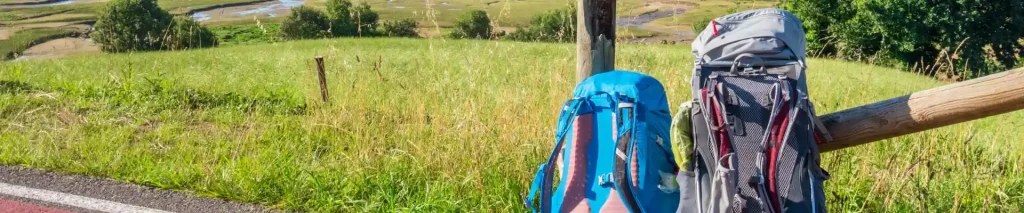
If you have ever wondered whether it is possible to do a pilgrimage in Portugal, what kinds of pilgrimages are, or what stories lie behind them, the answer is YES. Portugal is not only beaches, wine, and charming cities, but it is also a land of trails—full of history, tradition, and emotions—that have been travelled for centuries by thousands of people who needed to find themselves or simply wanted to experience a different kind of adventure. Keep reading, because in this post we will explain you everything!
Is it Possible to Pilgrimage in Portugal?
Yes, it is possible to do a pilgrimage in Portugal and, in fact, it is very common! Thousands of pilgrims arrive in Portugal every year from different parts of the world with the aim of visiting Fátima or starting the Portuguese Way to Santiago.
✨ TIP: You can organise your pilgrimage individually or as part of a group with a specialist agency. At Galiwonders, we take care of everything for you to ensure you have the greatest comfort and safety possible. Don't hesitate to contact us and travel worry-free.
In addition, there is a beautiful connection between the pilgrimage to Fátima and the Camino de Santiago. Although they are different, both have centuries of history and are paths of introspection and personal transformation.
What pilgrimages are in Portugal?
Portugal has many pilgrimages. The most well-known are the pilgrimage to Fátima, which is also the most important in the country and one of the most important Catholic pilgrimages in the world.
On the other hand, there is the pilgrimage to the Camino de Santiago which, although its final destination is Spain, many of its routes start in beautiful cities such as Lisbon, Porto and Coimbra.
Lastly, there are also local pilgrimages, religious celebrations and processions to shrines such as the Sanctuary of Bom Jesus do Monte (Braga), Sanctuary of Nossa Senhora da Peneda (Geres), Nossa Senhora da Nazaré (Nazaré), among others.
What is the pilgrimage to Fatima?
Fatima became famous for the apparitions of the Virgin Mary in 1917 to three shepherd children. According to reports, the Virgin appeared to them on several occasions and conveyed messages of prayer, conversion and peace. During the last apparition, on 13 October, the famous Miracle of the Sun took place, witnessed by thousands of people. Since then, the Sanctuary of Our Lady of the Rosary of Fatima, located in central Portugal, has become a destination for millions of pilgrims from all over the world.
Did you know that... the Miracle of the Sun happened on 13 October 1917 near Fátima (Portugal) during the last of six apparitions of the Virgin Mary to three shepherds? On that day, thousands of people saw the sun change size, spin rapidly and emit flashes of light in different colours.
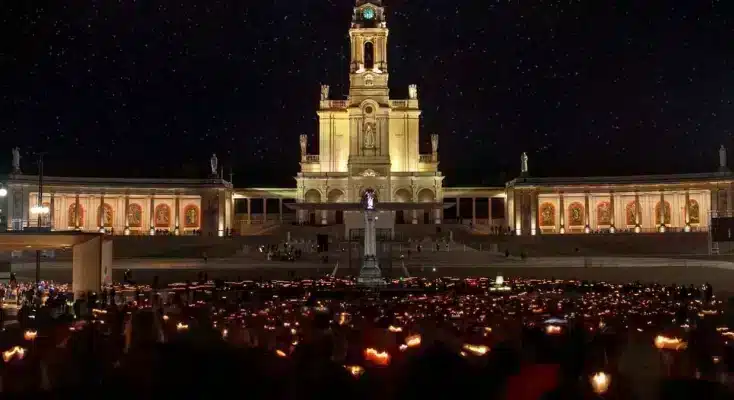
Plus, visitors take part in liturgical celebrations and candlelight processions. Today, the story of Fátima continues to inspire people of all ages and is a symbol of comfort and spiritual renewal. In fact, for many, making a pilgrimage to Fátima is a way to strengthen their faith, ask for or give thanks for spiritual and personal favours, or simply seek inner peace and reflection.
Did you know that... The busiest days in Fátima are 13 May, the anniversary of the first apparition, and 13 October, the anniversary of the fifth and final apparition?
Indeed, some individuals walk for days from their villages or cities, while others arrive by car, bus, or bicycle. In this sense, the Caminos de Fátima are a network of religious and cultural itineraries that begin in various locations and end at the Sanctuary of Fátima (for example, Camino del Tajo, Camino de Nazaré, Camino del Norte, Ruta Carmelita, among others).
The Portuguese Way on the Camino de Santiago
The Portuguese Way is one of the well-known routes of the Camino de Santiago, and one of the most travelled after the French Way. This route starts in Portugal and crosses the country from south to north, passing through the border into Galicia until it reaches the Cathedral of Santiago de Compostela in Spain.
This is a pilgrimage in honour of Saint James. The route can be walked either through the inland path or along the Portuguese Coastal Way, which follows the Atlantic coastline. Both paths offer their own unique charm and eventually merge on the way to the shared final destination: Santiago de Compostela.
How to do the Portuguese Way to Santiago and how long does it take?
The Portuguese Way is one of the most beautiful and least crowded routes to Santiago de Compostela. It starts at different points and takes you through different landscapes, historic villages and well-marked paths. It doesn’t matter if you’re doing it for faith, adventure or to disconnect. All you need is comfortable footwear and the desire to experience something different.

You can start in Lisbon if you’re up for the full experience, or choose Coimbra or Porto if you’re short on time and prefer a Camino de Santiago route in 15 days. You can also start in Tui, which will allow you to walk the last 100 km of the Camino and obtain the Compostela certificate.
Regarding the duration, it depends on what you are looking for. Do you need to plan your trip and don’t know where to start? We can advise and help you!