


the Camino de Santiago from Sarria will trake you to the Cathedral of Santiago de Compostela from this small town in the interior of the province of Lugo. To reach the city of the Apostle, we will have to walk five days, doing an average of 20 km/day. Let’s get ready for the Camino and let’s go!
From Galiwonders we recommend you to do this route in spring and autumn. This time of the year is a unique opportunity to walk along the most famous route of the Camino de Santiago with a tranquility that normally would not be possible to experiencie. Along the wonderful French route from Sarria, in the forests and natural spaces of Galicia, you will meet pilgrims from all over the world.
Last year alone more than 96,000 pilgrims chose the French route from Sarria!
To facilitate the experience of its customers, Galiwonders offer you a complete service from the beginning of the way to your final destination.
We will book all the hotels and restaurants for you. And every morning, our transporters will pick up your luggage from your hotel and drop it off at the next hotel so that all you have to worry about is enjoying your trip.
An experience that will allow you to clear your mind and immerse yourself in a natural environment far from the noise and full of peace. You will find beautiful nature, vast open spaces, charming villages, encouters with local people with whom we can talk about our journey and time to go deep inside yourself.

The French Way from Sarria is one of the most famous routes of the French Way, as it comprises the last 116 kilometres of the French Way. This means that its location meets the minimum 100 kilometres for pilgrims on foot to obtain the Compostela at the Pilgrim’s Office in Santiago.
Currently, more than 350,000 people from all over the world walk the routes of the Camino de Santiago every year. The French Way from Sarria is the most popular, as according to the Pilgrim’s Welcome Office of Santiago 96,124 people made this route in 2019, which represents 27% of all pilgrims who came to Santiago de Compostela that year.
This route was the first itinerary of the Camino de Santiago to be declared a World Heritage Site by UNESCO and the first European Cultural Itinerary. Furthermore, this route is characterised by its variety of landscapes and its extraordinary wealth of monuments, culture and gastronomy.
The French Way from Sarria is one of the most popular routes of the Way from Sarria is one of the most popular routes of the Way of St. James and runs through the autonomous community of Galicia, more specifically the provinces of Lugo and A Coruña. This route has a length of 116 kilometres and is especially known for being the minimum stretch required to obtain the Compostela, the pilgrimage certificate, because it exceeds the 100 kilometres required.
Portomarín is a village in the province of Lugo. It was a crucial point on the Way of St. James during the Middle Ages, as in this small rural village, pilgrims crossed the river Miño in boats to continue their pilgrimage to Santiago de Compostela.
One of the most significant milestones in the history of Portomarín occurred in the 1960s, when it was decided to build a reservoir on the river Miño to generate hydroelectric power. This meant that Portomarín would be submerged under the waters of the reservoir. As a result, the town was moved to a higher and safer location. To preserve its history and heritage many of its historic buildings, including the Church of San Juan, were dismantled stone by stone and rebuilt in the new location.
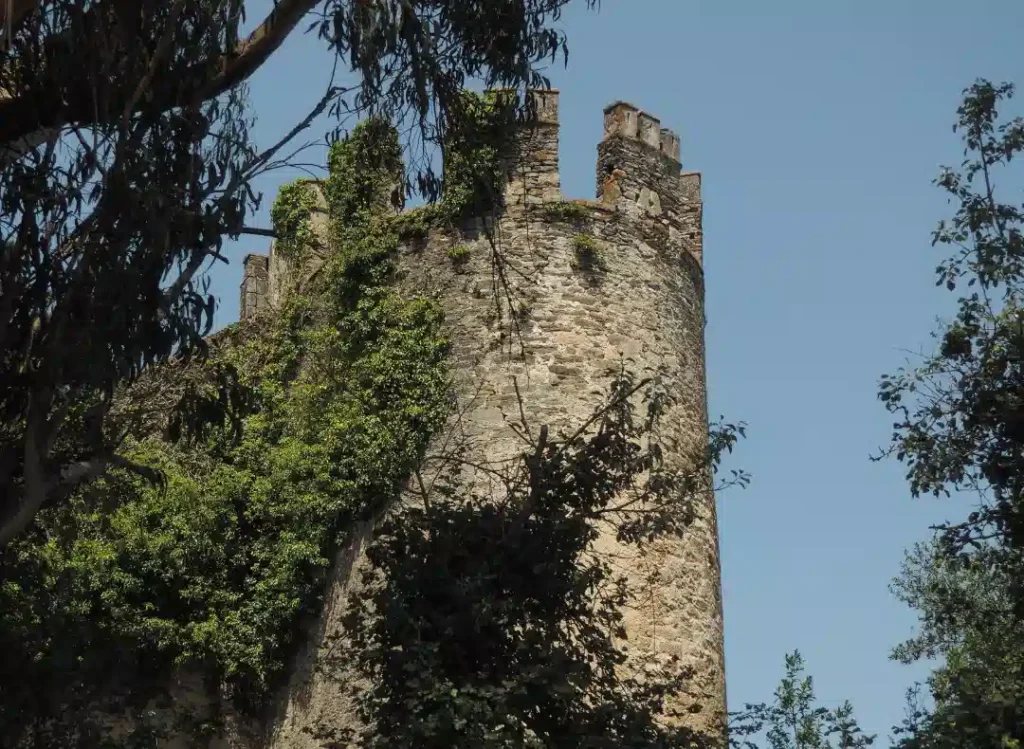
Today, this same church remains an important landmark and the ruins of the old fortress are a reminder of the town’s strategic history.

Also located in the province of Lugo, this town has mediaeval origins, as it was founded at a crossroads that formed part of the network of trade routes and pilgrimage routes that converge in Santiago de Compostela.
The town has a series of churches and religious monuments that reflect its history linked to the pilgrimage. The Church of San Tirso, of Romanesque origin, is one of the main examples. This church has an impressive Baroque altarpiece and has been restored to preserve its historical beauty.

Arzúa is a small rural village in the province of A Coruña. With the rise of pilgrimages in the Middle Ages, pilgrim hospitals were built in this village, such as the hospital of Ribadiso da Ponte or the convent of Magdalena, which provided assistance to pilgrims. Since the 20th century, this village has owed its economic development to the expansion of the dairy industry and the production of cheese and cheese-by-products. It is also one of the best-known points on the French Way, due to its proximity to Santiago de Compostela.
Arzúa is one of those small towns that help pilgrims to get some rest when they are about to finish walking the full French Way. After so many days, we can feel that Santiago de Compostela is getting closer, and words seem to say: And suddenly… Arzúa!
There are really nice walking days on the way to Santiago, but the one to Arzua is kind of special: impressive houses, lovely country cottages, chapels and churches to visit… it is a very special town, with a peculiar architecture, all surrounded by pure nature. Do not hesitate to stop, and enjoy this hidden corner of Galicia.

Arzúa is located in the province of A Coruña, in the south west region (the French Way and Northern Way join together in this town). We strongly recommend all pilgrims to try one of the most valuable exquisites of the region: the cheese Arzúa-Ulloa. It is so popular, that there is even a “Cheese Festival”, that takes place the first Sunday of March. During the festival, all visitors will be more than welcome to join the events around the town, such as folk concerts, cultural functions, and other ceremonies.
If you are walking the French Way during a different period of the year, don’t worry, since you’ll always be able to try the cheese, and enjoy the pilgrim vibes.
We must not forget about the cultural legacy of Arzua: here we can find relics from the prehistory, the Bronze Age… and of course Medieval. The presence of pilgrims during this period of history was so intense that the route did not experience so much “attendance” until the
90’s (when it was the first route to be designated European Cultural Itinerary by the UNESCO).
All those pilgrims interested on the way of life of the inhabitants of Arzua, may visit the “Museums of the Identity” (“Museos de la Identidad” in Spanish). People from Arzua have always been linked to the Camino de Santiago (both the French and the Northern Way).

It is quite easy to be dazzled by this land and its people: it can be considered as sort of enchantment, that usually encourages visitors to come back.
We recommend to visit: *Chapel of A Magdalena; *Church of San Paio de Burres; *Church of San Cristovo de Domdob¡n;*Church of San Pedro de Mella;*River Beach Rio Oso;*A Fontesanta Natural Area;*Romería of A Mota;*Pazos: Pazo de Brandeso; Pazos de Outeiro; Pazo de Castañeda; Pazo de Mangul¡n; Pazo de Ardans; Pazo de Rosende; *Casas grandes: Rectoral de Branz¡; Casa de Maroxo: Casa de Solar de Riva; Casa de Fondevila.
Also known as “A Rúa do Peregrino”, it is a small village in the province of A Coruña. It is located on the last stage of the French Way. Its history is closely related to the path of the Camino de Santiago and the flow of pilgrims over the centuries.
Over time, the arrival of pilgrims in large numbers also contributed to the development of the area. Hotels, hostels, restaurants and other services for pilgrims were established to meet the growing demand.
Today the municipality remains a vital point in the Camino de Santiago experience, where pilgrims can rest and connect with other travellers on the imminent arrival in Santiago de Compostela.
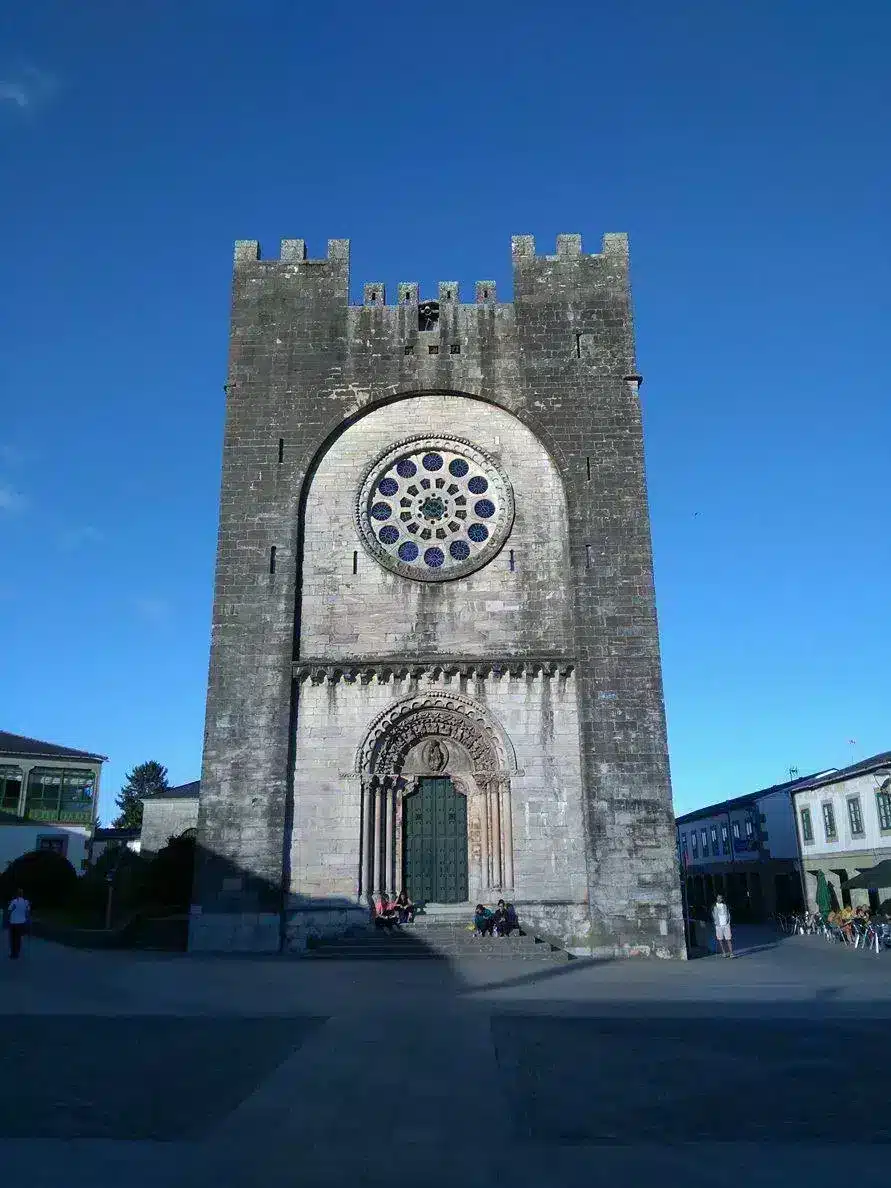
This church was built in the 12th century. Formerly the church was located in the old part of the valley of Portomarín, but during the construction of the Belesar reservoir in the 1960s it was dismantled stone by stone and rebuilt in a higher location to prevent it from being submerged under the waters.
Its bell tower is one of its most notable elements, as it offers panoramic views of the Belesar reservoir and the surrounding area.
This castro is in the municipality of Castromaior. Its location of the stage between Portomarín and Palas de Rei allows you to enjoy a panoramic view of the right bank of the river Miño. It also has an intricate system of moats, walls, ramparts and palisades surrounding the access to the settlement.
The castro has been fitted out for the visit of tourists and the curious interested in archaeology. In addition, restoration and conservation work has been carried out at the archaeological site to preserve its structures and allow visitors to better understand its history.
The Church of Santa María has a gothic style, although characteristic concepts and decorative motifs of the Romanesque style persist. On its façade there is a sculpture of the Virgin in high relief and just opposite is the façade of the old pilgrims’ hostel founded by the Ulloa family in the 12th century.
In front of the church is the Cabazo, which is a granary in the shape of a basket that was used to store corn, like a primitive hórreo. This building is an example of traditional Galician engineering, which is adapted to the environment and to the needs of preserving the crop.
This bridge of mediaeval origin dates from the 12th century and has been an essential crossing point for pilgrims on the Camino over time, as its strategic location over the river Iso contributes to its historical importance. It consists of a single semicircular arch and is built with granite masonry.
The Hermitage of San Andrés is of mediaeval origin and dates back to the end of the 14th and beginning of the 15th century. It is built in Mudejar style and has a solid and massive appearance. Inside, the sculpture of San Andrés and a 17th century Baroque altarpiece stand out. Its architecture and location in a natural setting highlight the connection between faith, history and nature that characterises the Camino de Santiago experience.
Located in the Ribeira Sacra, a land where the mencía grape reigns supreme, is this town that still preserves echoes of the great city it was in the Middle Ages. Monforte de Lemos also preserves the mediaeval walls of the old castle of San Vicente and boasts an impressive Parador hotel that houses the palace of the powerful Counts of Lemos.
You can visit it on your arrival in Sarria, as it is half an hour’s drive from the centre of the town.
The city of Lugo is located in the province of the same name, although its origins date back to Celtic times, the city experienced its period of maximum splendour during the Middle Ages. Today Lugo is a contemporary city that still preserves elements of this period integrated with the city. The Wall of Lugo, which borders the city, its Cathedral, the Domus del Mitreo or its Roman bridge are some of them.
You can visit Lugo on your way through Portomarín, as it is just 28 minutes by car from the centre of this town.

Spring and autumn offer the most favourable weather conditions for walking.
The best time to do the Camino del Norte depends on the personal preferences of each pilgrim and their travel conditions. Each season has its own advantages and disadvantages.
Our recommendation is to do he French Way from Sarria in spring or autumn. At this time the influx of pilgrims is less than in summer and services are running at full capacity and finding accommodation and transport will not be a problem. In addition, in these two seasons the weather conditions are more favourable for walking.
The autonomous region of Galicia is influenced by the oceanic climate. Temperatures are mild in the coastal areas and more extreme inland, both in the summer and winter months. On some days in January and February temperatures can drop to 0ºC. On the other hand, rainfall is light and intermittent in autumn and spring and heavy in winter.
Doing this route is a manageable experience for everyone if it is properly planned. In addition, you should take into account several things before embarking on this adventure:
If you need more detailed information, you can access it here. Remember that each pilgrimage is unique and personal, take your time to enjoy this experience.
Although on the French Way from Sarria to Santiago de Compostela, we will have to walk “only” 100 km, we advise you to be ready and to train a little before starting your route. It is always a good idea to walk a few routes, with increasing distances and gradients, to start the route in full physical shape.

For example, we will do the Camino at the end of July. Therefore, we will have to start walking early in the morning to avoid the hottest hours, we will have to hydrate all the time, carrying with us a lot of water and using a cap and a lot of sunscreen!
Booking accommodation in advance on this Jacobean route is essential to ensure a place to sleep and avoid unpleasant surprises. In fact, we must take into consideration the great demand of pilgrims who travel this route, especially because the Xacobean Holy Year 2021 has just begun.
Very often the demand exceeds the supply of accommodation, especially considering that pilgrims are concentrated in specific periods. By booking with Galiwonders, you will be assured of accommodation at the end of each stage. We take care of all the logistical details, so that you can fully enjoy the experience.

The accommodations we work with, always have private rooms with private bathrooms, and offer breakfast and dinner. In addition, we always work with establishments that allow the collection of the luggages so that our carriers can deliver and pick them up at each stage. The location of all our arranged accommodations is always very central and in case it is more than 1 km away from the road, we organize a transfer to the hotel.

We start by talking about the hotels you will find in the first stage of the last 100 km of the French Way, Sarria. For each stage we will make a distinction between Standard and Superior Hotels. The first ones are pensions or 2* – 3* hotels and always have private bathrooms in the room. They offer breakfast and dinner services that can be served both in the structure itself and in nearby restaurants and bars.

With regard to the Superior Hotels, these are normally 4*- 5* hotels, sometimes Pazos or Paradores. The services offered are the same (bath in suite, breakfast, dinner) but of a higher level. This is the option for those who want to travel in luxury, enjoying the maximum comfort.
Sarria is the place where the last 100 km of the French Way begins, and offers many services to the pilgrims for this reason. In addition to its hotels and hostels, Sarria has many services such as stores, bars and restaurants that every year are filled with thousands of pilgrims en route to Santiago. The town is not too big, you can visit it in an afternoon and it will allow you to meet other travellers before starting your route, especially during this Xacobean Holy Year.
The Hostal – Restaurante dpCristal is located 5 minutes walk from the center and has 15 rooms equipped with private bathroom, TV and free wifi. This establishment has a cafeteria and restaurant service where you can taste the typical traditional dishes. It also has free parking for bicycles, laundry and reception 24h. A delicious breakfast buffet awaits you to start your first day on the way with the maximum of energy.


Built in 2016 the Malecón del Peregrino is located in Sarria by the river (Malecon area), in a quiet place with a great offer of bars, restaurants and cafes. Each of the 11 rooms has a private bathroom and good views. The establishment also has an apartment with all its amenities. It has a laundry service, a lounge area, a bicycle parking lot, an elevator and free wifi. A perfect place to start your journey to Santiago de Compostela!


In the middle of the Camino de Santiago, this family-run pension has 6 rooms, all with their own bathroom, television and free wifi. The Pensión Siete en el Camino, offers its guests a laundry service, a fully equipped kitchen, and indoor and outdoor common areas to rest together. A few meters away you will also have at your disposal all the services you may need such as pharmacies, bars and supermarkets.


The Hotel Alfonso IX, in the urban center of Sarria, is a 4 star hotel that offers spacious and comfortable rooms, a cafeteria service and a restaurant where you can taste the exquisite Galician cuisine. With its 57 rooms, distributed on three floors, it allows the maximum rest for the pilgrims who decide to spend their first night here before starting the journey.


The Rectoral de Goián is a rural house that is located in a privileged environment a few kilometers from Sarria. This building, an old Rectory, was originally built in 1704, and successively restored over time, (its last restoration was in 2000). Both the interiors and the exteriors of the Rectory, will allow you to appreciate the details of this rural house and to appreciate its incredible peace during your stay. Do not miss the delicious homemade breakfasts in this idyllic place, to start your journey in full harmony with nature.


Casa Morgade is located in a rural environment in the middle of the Camino Francés. The warmth of its facilities and its quiet location in the middle of nature offer maximum relaxation to the pilgrims. The gastronomy that you will be able to taste in this establishment comes mainly from homemade products and own crops. The rooms have private bathrooms and you can also rest on the terraces and in the living rooms. The best relaxation for pilgrims!


In Portomarín the first stage of the French Way from Sarria ends and the environment that will be waiting for you will leave you speechless. Besides being able to stroll through its incredible old town, declared a Historic-Artistic Site in 1946, you will be able to enjoy the views over the Miño River and the surrounding forests. Without a doubt, in this small town you will meet many other pilgrims, you can visit the church of San Nicolás and relax in one of the many bars in the center.
In the centre of Portomarín, you will find the Pensión Mar. This family-run establishment has comfortable rooms with their own bathrooms, perfect for resting after your first day on the road. Its location is perfect for getting to know the charming village of Portomarín and is just a few meters from bars and restaurants. In addition, in Pension Mar there is laundry service, parking for bicycles, kitchen, terrace, outdoor clothesline, WIFI in all rooms and cab service.


The Pensión Arenas Porto is located right in the historic center of Portomarín, next to the Church of San Nicolás and the emblematic town hall. The pension also offers breakfast service, laundry, wifi and private bathrooms in each room. Here you can enjoy a good meal, relaxing on the terrace after your first day on the Way of Saint James.


The Hostal El Padrino is located in a perfect position in the village of Portomarín. If you choose to stay in this modern hostel, you can relax on the terrace with the jacuzzi and enjoy a well-deserved break. The original rooms have private bathrooms, wifi and TV. The establishment also has a bar and serves continental breakfast every day. Are you ready for an afternoon of relaxation?


One of the jewels of Portomarín is undoubtedly the Pazo de Berbetoros, a historical building, also known as the “Casa de la Marquesa” with a past all to discover. Like other relevant buildings in town, it was partially moved to its current location after the flooding of the village of Portomarín in 1963. Today it has luxurious rooms, an extensive garden, perfect for the rest of the pilgrims and a cozy cafeteria where guests can have breakfast before starting their route.


The Hotel Ferramenteiro, which has a total of 21 modern rooms, is located in a key position for the pilgrims. Besides being in the middle of the route, it offers spectacular views over the Miño River. In this hotel, pilgrims can count on a buffet restaurant, free wifi and bicycle parking. In addition, many of the rooms have a private terrace, a perfect place to connect with the magic of the Camino and its landscapes!


O Cruceiro is a private hostel located in Ventas de Narón, at the foot of the Camino de Santiago. Exclusively for pilgrims who present their credentials, it offers menus and breakfast, as well as a dining room, garden and terrace. This establishment has in addition a parking for bicycles, washing machines and free wifi.


In Palas de Rei the second stage of the French Way from Sarria ends. You will have crossed landscapes and woods with a lot of charm and now a resting afternoon awaits you. And what better than a good meal to get your strength back? In Palas de Rei you will find a good offer of bars and restaurants to discover the local gastronomy. Enjoy! If you still have some energy left, we recommend you not to miss a visit to the Parish of San Tirso or the Castle of Pambre.
The modern and cozy rooms of the Pensión Fonte, distributed in three floors, will surprise you by their details and quality. With wifi in all the establishment, it also counts on elevator, parking for bicycles and tv in all the rooms. An ideal place to rest when you arrive in Palas de Rei, no doubt you’ll feel at home!


The Casa Avelina is located in the center of Palas de Rei. It offers 15 modern, newly created rooms, all with private bathrooms and wifi. The establishment also has washing machine/dryer service, elevator and bicycle parking. A perfect place to rest with all the comforts after your second day on the road.


The Hotel Mica has large, modern and cozy rooms. It is located in a quiet place at the entrance of the village of Palas de Rei and welcomes many pilgrims who say they feel at home in this hotel. Among the services of this family hotel: a rich breakfast, private bathrooms in each room, free wifi, outdoor terrace. A perfect place to relax in full comfort.


Among the superior hotels of Palas de Rei, there is the Rectoral de Lestedo located in an ideal natural environment. This hotel offers spacious rooms with all the modern comforts, maintaining a traditional rustic style that fills it with charm. At the Rectoral, massages are offered to guests, as well as a continental or buffet breakfast service, a bar with a terrace and a restaurant. What better place to rest and enjoy nature on your route?


The Pazo de Ludeiro, has a great past since its construction is prior to 1468! The changes and improvements in modern style that were made to add comfort to its rooms and to allow a management that is respectful with the environment, did not change the charm of this small fortress. The rooms are comfortable and maintain a continuity with tradition thanks to the hand-carved furniture. Among its services we find: a large living room with a well-stocked library, fireplace, bar, music, television, free wi-fi and restaurant service. Take a break in the middle of nature!


If you are not one of the pilgrims who want to go directly from Palas de Rei to Arzúa (about 29 km away) and prefer to take some more time to rest and enjoy your journey, you can stop at Melide. Do not miss their famous dish: the octopus à feira, a real delight!
The Hotel Carlos 96 is located in the center of Melide, very close to all the services and stores you may need. Family run, you will feel at home! The establishment has a restaurant and breakfast buffet service. The rooms are comfortable, with private bathrooms. Simply perfect for relaxing on the Way!


In the centre of Melide we find the Pensión Orois which has a bar and terrace. The establishment also has a restaurant, shared kitchen, shared lounge and free WiFi. Pension Orois serves a continental breakfast every day – perfect location!


Also located in Melide, we find A Lúa do Camiño, a hotel in the middle of the Camino that offers free WiFi and rooms equipped with flat screen TV and private bathroom. It also has a swimming pool, garden and a shared lounge – the ideal place to start your next day with energy and vitality!


Casa Adro is an establishment located in Furelos, Melide, in the middle of the French Way. To get to this medieval village, which dates back to the 12th century, you will have to cross the bridge over the Furelos River, one of the most beautiful on this route. This luxury hotel has spacious modern rooms, private bathrooms, wifi and offers a rich traditional breakfast based on local products. In addition you can taste a typical menu for dinner or rest by having a glass of wine in the relaxation area. A perfect place to unwind and enjoy a unique natural environment.


Casa de las Somoza, is located in Melide, 48 km from Santiago. The rooms, with their own bathrooms, free wifi and TV, allow the pilgrims who finish their stage here to have a well-deserved rest. The establishment has a laundry service, bar, restaurant, garden, terrace and massage service. What are you waiting for to clear your mind and resume the Way full of energy?


With its 29 km distance, it is the longest stage of the French Way; therefore, many pilgrims choose to stay in Melide, (halfway). Among the main points of interest are the medieval village of Ribadiso before arriving in Arzúa, one of the favorites of the pilgrims. Don’t miss the famous cheese of Arzúa once you arrive!
Casa Teodora is a family business that started in 1910, and since then has offered quality services with personalized treatment. Besides the 28 rooms, with TV, wifi and private bathrooms, it has a common room, cafeteria and restaurant of traditional Galician cuisine. Right in the center of Arzúa, it allows a practical access to all the services. Come to know the Arzuan tradition in its maximum expression!


Pensión Costoya has been recently restored and is located in one of the most central and oldest streets of Arzúa (Calle del Norte). Close to the Town Hall and the Church, this quiet accommodation is perfect for the rest of the pilgrims.
All rooms have private bathrooms, wifi and tv, as well as an outdoor swimming pool. The establishment offers laundry services and both the kitchen and the barbecue can be used at will by the guests. The ideal place to recover your strength after a long day of walking!
The 1930 Boutique Hotel has 14 elegant rooms, each with a different history, equipped with high quality materials and decorated with a unique style. It has a large garden where you can relax and walk, having a snack in a beautiful natural environment. The restaurant offers high quality dishes that will surprise you. Do not miss the opportunity to live a quality stay in the luxury of this cozy hotel!


Casa Brandariz is located in Dombodan, overlooking the valley, and only 1 km. from the Portodemouros Reservoir. If you stay here you will have a transfer included to Arzúa. The house, of centennial origin, maintains its traditional charm while offering all the comfort services sought by the modern pilgrim. An establishment of superior quality that will surprise you with its idyllic location and will delight you with its incredible local gastronomy – a guaranteed choice!


This establishment offers both private rooms with private bathrooms and bunk beds with shared bathrooms. In addition the Albergue Turistico Salceda offers an area with garden and outdoor pool, perfect for relaxing after a long day of walking. Here you can count on a restaurant with a large dining room for 70 people, the perfect stop to prepare yourself for the last part of the journey!


From Pedrouzo, your last stage of the Way will begin, so get ready to live the great emotions of this day of pilgrimage in which you will finally arrive at the Cathedral of Santiago. We advise you to start your day early to arrive in time for the Pilgrim’s mass and have enough time to visit the wonderful Santiago de Compostela
The Pensión Pedrouzo is located in a quiet area in the center of Pedrouzo, less than 20 km from Santiago. This modern and renovated pension offers spacious private rooms with wifi, tv and air conditioning. It also has a washing machine/dryer service, bicycle parking and all the essential services just a few meters away. Ready for your last stage?


The PensiónPlatas is a modern accommodation located in Arca- O Pedrouzo, in O Pino. It has rooms with private bath, tv, air conditioning, wifi and laundry service. An ideal place for the rest of the pilgrims.
This rural house is located in a charming natural environment that has an ethnographic museum inside.O Muiño de Pena, is a traditional establishment that you will love, both for its interiors and its exterior spaces. The continuity with the tradition and the tranquility of the place will allow you to enjoy the maximum rest before starting your last stage. Taste the delicious cuisine offered by its restaurant and ¡Buen Camino, you’re almost there!


The rural house O Acivro presents all the modern comforts, with rooms with their own bathroom, TV, air conditioning and wifi, but at the same time maintains a strong connection with the rural tradition of Galicia that can be seen in every detail of its facilities. Discover the typical local dishes in its restaurant and rest before your last day on the Way in this idyllic place!


If you want to reach Santiago de Compostela early in the morning, we suggest you to finish your stage in Lavacolla. In this way, you will only need to walk 10 km on your last day and you will be able to enjoy the wonderful views from de O Monte do Gozo and visit Santiago in complete relax.
The Hotel Garcas is ideal for its location, 3 km away from the airport and 4 km away from the Monte do Gozo. You will only be 8km far from the Cathedral, in a peaceful place. Therefore, you can enjoy a complete rest before walking your last stage. The private rooms have tv, wi-fi and private bathrooms. The hotel also has interior and exterior terraces, and a restaurant where you can enjoy the local gastronomy.


The hotel Ruta Jacobea, is very close to the Santiago airport. It offers 16 rooms and 4 suites, decorated with a unique and comfortable style. Each room has tv, wifi and private bathroom. Moreover, you can rest in the outdoor cafeteria, and enjoy a delicious dinner with fresh products at its restaurant.


Casa de Amancio, is located 5 km away from Santiago de Compostela. It’s a warm hotel in the village of Vilamaior, in a unique natural environment. The original structure of this house was maintained after the restoration works, so that guests can appreciate the typical style of a tradicional Galician house with hórreo. The “Casa” offers a restaurant where you can enjoy traditional plates. Get ready to relax and enjoy a comfortable stay!


The Pazo Xan Xordo, is located 3 km away from the Airport of Lavacolla and 10 km away from the Cathedral of Santiago. It represents an example of the architectural past of this area. This stately home, built in the XVII century, was renovated and rehabilitated to offer the maximum confort to its modern guests. It has a courtyard, a garden, an hórreo and a chapel, since it was a place of cult for the inhabitants of this area. The Pazo, is located in a calm natural environment, ideal to rest before starting your last stage!


If you want to receive a complete itinerary with all the services we offer along the Camino de Santiago, do not hesitate to contact us. At Galiwonders, we take care of creating your perfect experience along the Way!


