The Camino de Santiago is one of the oldest and most revered pilgrimage routes in the world. With a history dating back centuries, this journey is a unique experience that draws people from all corners of the globe in search of adventure, reflection and connection.
This historic trail stretches across mainly northern Spain, connecting various regions and offering diverse scenery, cultural experiences, and historical significance.
Where is the Camino de Santiago in Spain?
The Camino de Santiago is a network of pilgrimage routes that extend across the country, all leading to the historic city of Santiago de Compostela, in the region of Galicia, northwest Spain.
Overview of the Camino’s location within Spain
The Camino de Santiago passes through several Spanish regions, each offering unique cultural and scenic experiences. The most famous route, the Frech Way, begins in the French Pyrenees and moves through Navarra, La Rioja, Castilla y León, and Galicia, before reaching Santiago de Compostela. Other routes, such as the Northern Way, take different paths following Spain’s northern coast, while the Portuguese Way enters Spain from Portugal, passing through cities like Tui and Pontevedra before reaching Santiago.
Where Does the Camino de Santiago Start?
The Camino has multiple starting points, depending on the chosen route. Some of the most popular starting locations in Spain include:
- Roncesvalles (Navarra, Spain) – Although the traditional starting point for the entire French Way is St. Jean Pied de Port, right on the border with Spain, Roncesvalles is a popular alternative starting point.
- Irún (Basque Country) – The beginning of the Camino del Norte, following the northern coast.
- Ferrol or A Coruña (Galicia) – Starting points of the Camino Inglés, a shorter but historic route.
- Tui (Galicia) – The most common starting point for the Camino Portugués within Spain.
Although many pilgrims choose to complete the entire route, others start in Galicia, as is the case of Sarria or Tui (the last 100 km of the French and Portuguese Way), to meet the minimum distance required to obtain the official Compostela certificate.
Main Pilgrimage Routes of the Camino in Spain
The Camino de Santiago boasts a variety of routes, each with its own beauty and significance. From the popular and well-known ones to other less traveled such as the Lighthouse Way, or Camino A Orixe, the choice of route will depend on the experience you want to live, the distance you want to travel and the season in which you decide to undertake this unique adventure.
While all paths lead to Santiago, the journey varies depending on the starting point. Below are the most popular routes within Spain.
French Way: The Most Popular Route
It is the most traveled route of the Camino de Santiago. It crosses the Pyrenees into Spain, passing through key regions like Navarra, La Rioja, Castilla y León, and Galicia before reaching Santiago. This route is well-marked, offers abundant accommodation, and is rich in historical and cultural landmarks, making it ideal for both first-time and experienced pilgrims.
Portuguese Way: The Route from Portugal to Spain
The most common starting point is Porto, as it allows pilgrims to complete the last 100 km from Tui, the minimum required for the Compostela certificate. This route takes walkers through beautiful countryside, historic towns, and important cities such as Pontevedra and Padrón, offering a blend of Portuguese and Galician culture.
Northern Way: The Coastal Camino Through Spain
This route follows the northern coastline of Spain, beginning in Irún, near the French border. This scenic route passes through the Basque Country, Cantabria, Asturias, and Galicia, offering stunning ocean views, rugged landscapes, and a quieter, less crowded experience.
Primitive Way and English Way: Alternative Historical Paths
The Primitive Way is the oldest recorded route of the Camino de Santiago, starting in Oviedo, Asturias. It is known for its mountainous terrain and fewer crowds, making it a great option for those looking for a more authentic and challenging pilgrimage.
The English Way, on the other hand, starts in Ferrol or A Coruña and was historically used by English and other Northern European pilgrims arriving by sea. Since it covers a shorter distance, it is a great option for those with limited time but still wanting to experience this live-changing experience.
Each of these routes showcases different aspects of Spain’s geography, history, and culture, making the Camino de Santiago a diverse and enriching journey regardless of the chosen path.

Subscribe to our newsletter and receive our FREE Practical Guide to the Camino de Santiago. In this guide you will find all the information you need to start planning your Camino.

How to Get to the Camino de Santiago?
Nowadays, reaching the Camino de Santiago in Spain is easier than ever, thanks to well-connected transport options across the country. Whether you’re arriving from abroad or traveling within Spain, you can choose from multiple ways to access your chosen starting point.
By Air: Nearest airports to the Camino de Santiago
For international pilgrims, flying is often the fastest way to reach the Camino de Santiago in Spain. The most convenient airports include Santiago de Compostela, Vigo or even Bilbao:
- Santiago de Compostela Airport (SCQ): The closest airport to the final destination of the Camino and the best option for those returning home, with flights from major European cities.
- Vigo Airport (VGO): The most convenient gateway for the Camino Portugués, with connections to Madrid, Barcelona, and other Spanish cities.
- A Coruña Airport (LCG): Located in northern Spain, this is an interesting option if your plan is to start the English Way or even the Primitivo.
- Madrid-Barajas Airport (MAD): Spain’s largest international hub, offering excellent connections to Camino starting points.
- Bilbao Airport (BIO): Ideal for those beginning the Camino del Norte, with connections across Europe.
- Pamplona Airport (PNA): Convenient for those starting the Camino Francés in the Pyrenees.
From these airports, you can continue your journey by train, bus, or car to reach your chosen starting location. For more information about distances and connections with other means of transport, do not hesitate to check our guide to Galicia’s airports.
By Train: Rail Connections to the Camino de Santiago in Spain
Trains are a comfortable and scenic way to travel to the Camino de Santiago in Spain, making it easy to access different routes. Spain’s Renfe train network provides efficient transport to many cities and Camino starting points:
- Pamplona (Navarre): A key access point for the French Way, with train connections from Madrid and Barcelona.
- León: A major city along the French Way, accessible by high-speed train (AVE) from Madrid.
- Sarria (Galicia): The most popular starting point for those walking the final 100 km of the French Way, with direct trains from Madrid.
- A Coruña and Ferrol (Galicia): The traditional starting points of the English Way , with train access from other Galician cities.
By Bus: Regional and Long-Distance Bus Services
Buses are often the most affordable way to reach the Camino de Santiago, with frequent schedules and multiple departure points. Spain has an extensive bus network, offering direct routes to many Camino starting points in Spain. Bus companies such as Alsa, Monbus, and FlixBus operate long-distance and regional services. Key routes include:
- Madrid to Sarria or León (French Way)
- Porto to Tui (Portuguese Way)
- Bilbao to San Sebastián or Irún (Northern Way)
- Santiago de Compostela to diverse Camino towns
By Car: Driving to the Camino de Santiago
For those who prefer flexibility, driving is a great option to reach the Camino de Santiago, as many starting points are accessible by road.
Rental cars are available in major cities like Madrid, Santiago, and Vigo, allowing travelers to drive directly to their chosen route. In addition, parking options vary depending on the town, so it’s advisable to explore different options and check local facilities before starting your walk.

Planning Your Camino de Santiago: Key Insights
Reasons to Walk the Camino from Spain
Starting the Camino de Santiago in Spain is the most authentic way to experience this historic pilgrimage. While the Camino has routes across Europe, Spain remains the most popular and historically significant starting point. Spain is home to the most iconic routes, including the French Way, the Northern Way, and the Primitive one, all leading to the Cathedral of Santiago de Compostela, the spiritual heart of the journey. Beyond the pilgrimage itself, Spain’s rich culture, diverse landscapes, and renowned cuisine make the journey even more special. From medieval towns to coastal views and traditional dishes like Galician seafood, Castilian stews and Basque pintxos, each stage offers something unique.
The reason people decide to embark on the Camino de Santiago varies from pilgrim to pilgrim. Whether you’re drawn to the history, the challenge, or the opportunity for reflection, Spain offers the best environment to experience the true essence of the Camino de Santiago
Best Time To Start Your Journey
The Camino de Santiago can be undertaken at any time of the year, but the most popular months are between March and October. Our recommendation is to do this pilgrimage in spring or autumn. At this time the influx of pilgrims is less than in summer and services are running at full capacity and finding accommodation and transport will not be a problem. In addition, in these two seasons the weather in Spain is generally more favorable, with warmer temperatures and longer daylight hours.
What to Pack for the Camino
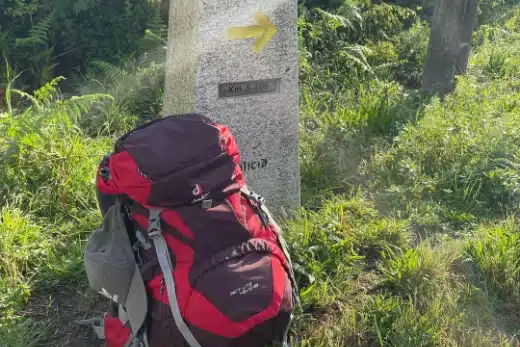
Packing for the Camino de Santiago requires careful consideration, as it is important to pack efficiently. Limit yourself to the essentials: a pair of comfortable shoes, clothes suitable for the weather, and a first aid kit. The weight of your backpack should not exceed 10% of your body weight. However, if you do not want to carry your backpack while walking the Camino, you can hire a luggage transfer service between stages.
Starting the Camino de Santiago in Spain: Average Duration
The duration of the Camino de Santiago pilgrimage from Spain depends on several factors, including the route chosen, walking pace, and personal preferences.
The most common is to do shorter sections of the routes, as they can be completed in as little as a week or two. Many pilgrims decide to walk the last 100 km, as this is the minimum distance required to obtain the Compostela. This typically takes 4 to 7 days, depending on the route. For example, the final stretch from Sarria to Santiago on the French Way is one of the most popular options, requiring about 5 to 6 days to complete.
Shorter and alternative routes, like the English Way (from Ferrol or A Coruña), can be completed in 5 to 6 days, while longer and more challenging paths, such as the Northern Way or the Primitive Way, may take upwards of 30 to 35 days if walked in full.
With routes covering thousands of kilometers across Spain, the Camino de Santiago is a cultural and spiritual experience that connects pilgrims with centuries of history and tradition. Whether you start in Sarria, León, Pamplona, or even Seville, every step brings you closer to this live-changing experience.