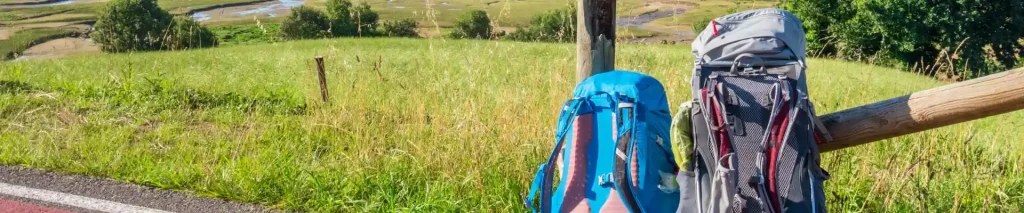
Would you like to walk the Camino de Santiago from Madrid, but don’t know where to start? Don’t worry, you’re in the right place! Walking any of the Camino de Santiago routes is an unforgettable experience and starting from Madrid is an excellent option. However, it is important to note that it is not recommended to do this route if it is the first time you are going to face this adventure; it is better to do it if you have already lived the experience of other roads (for example, the French Way, Portuguese Way, the English Way, among others). In this post, we tell you how to get to the best routes to start your journey from the heart of Spain. Get ready to enjoy a unique experience, full of history, landscapes and, above all, a lot of culture!
Is it possible to do the Camino de Santiago from Madrid?
Yes! In fact, there is the Camino de Madrid that connects Madrid with Sahagún (province of León), connecting with the French Way, the most popular among pilgrims. It is 800 kilometres long (322 km from Madrid to Sahagún, and about 500 km more if you continue to Santiago de Compostela) and has 13 stages.
Stages of Camino de Santiago from Madrid
Stage 1: Madrid – Tres Cantos (25.6 km)
The Camino de Santiago starts at the Iglesia de Santiago, in the centre of Madrid. After crossing the city, the route enters rural areas, crossing railway tracks and quiet roads. The stage ends in Tres Cantos.
Stage 2: Tres Cantos – Manzanares el Real (25.3 km)
This stage combines nature and heritage. It crosses fields and forests, following the arroyo Tejada. The destination is Manzanares el Real, where we can visit its impressive medieval castle and the Santillana reservoir.
Stage 3: Manzanares el Real – Cercedilla (20.4 km)
In this stage the route crosses the Sierra de Guadarrama and we will have the opportunity to visit Cueva de los Maquis (Maquis Cave). The stage ends in Cercedilla, a picturesque mountain village.
Stage 4: Cercedilla – Segovia (30.2 km)
A challenging stage that climbs through the Valle de la Fuenfría, an ancient Roman road. The descent leads to the historic city of Segovia, famous for its Roman aqueduct and the Alcazar.
Stage 5: Segovia – Santa María la Real de Nieva (22.7 km)
The route goes through rural roads, small villages and farmland. Santa María la Real de Nieva is known for its traditional architecture and peaceful atmosphere.
Stage 6: Santa María la Real de Nieva – Coca (20.3 km)
The route crosses farmland and small woods. Coca is famous for its impressive medieval castle, one of the best well-preserved in Castilla y León.
Stage 7: Coca – Alcazarén (22.1 km)
The route continues along the Tierra de Pinares, a region of pine forests and agricultural fields. Alcazarén is a small village with typical Castilian architecture.
Stage 8: Alcazarén – Puente Duero (20.5 km)
This stage crosses Tierra de Campos, a large agricultural plain. Puente Duero is known for its medieval bridge over the Duero River.
Stage 9: Puente Duero – Peñaflor de Hornija (22.3 km)
The route continues through farmland and small villages. Peñaflor de Hornija is a quiet village with historic architecture.
Stage 10: Peñaflor de Hornija – Medina de Rioseco (22.8 km)
The route crosses farmland and irrigation channels. Medina de Rioseco is a historic town with an important industrial and architectural heritage.
Stage 11: Medina de Rioseco – Cuenca de Campos (22.2 km)
The route continues through the Tierra de Campos, passing through small villages and farmland. Cuenca de Campos is a quiet town with traditional Castilian architecture.
Stage 12: Cuenca de Campos – Santervás de Campos (22.5 km)
This stage passes through agricultural plains and small villages. Santervás de Campos is a town with traditional architecture and a peaceful atmosphere.
Stage 13: Santervás de Campos – Sahagún (22.9 km)
The last stage of the Camino de Madrid leads to Sahagún, where it connects with the French Way. Sahagún is a historic town with important monuments and a rich tradition.
⭐TIP: Planning the Camino from Madrid can be overwhelming: stages, accommodation, baggage transfers, food, credentials... But you don't have to do it all on your own. Get support from a specialised agency for greater comfort and security. At Galiwonders, we help you make this experience unforgettable and worry-free.
History of Camino de Santiago from Madrid
The origin of this route dates back to 854, shortly after the discovery of the tomb of the Apostle in the Santiago de Compostela Cathedral. At that time, Madrid was once again part of the Christian kingdom and its devotion to the Apostle was very strong. So much so that a church was built and dedicated to him. Furthermore, with the election of Philip II as king, the number of pilgrims increased as Madrid became the permanent seat of the Court.
Did you know that... The starting point of the Camino de Madrid (kilometro zero) is located in the heart of the city, at the Iglesia de Santiago y San Juan Bautista church in Plaza de Santiago. It is on a small monolith and marks the beginning of the route. It is a historic and symbolic place for pilgrims.
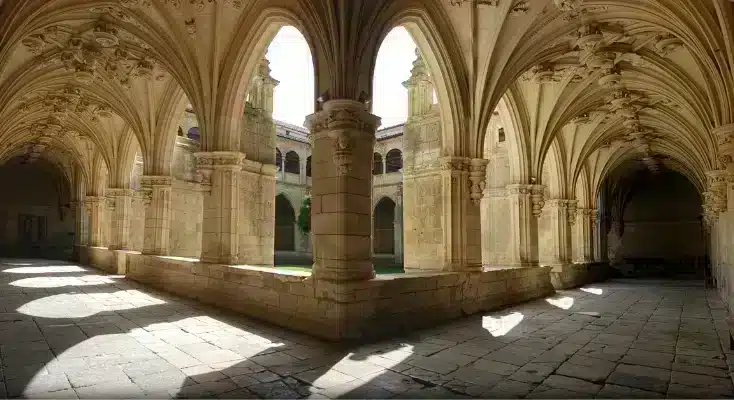
Plus, during the 15th, 16th, and 17th centuries, lots of shepherds who moved their herds around also used this route, as did Galician farmers who travelled from the north to work on the harvest in the regions of Castile.
However, the Napoleonic invasion and the demolition of the Iglesia de Santiago in 1810 hit a turning point in the loss of its identity. In addition, with the consolidation of more popular routes (French Way, Northern Way, etc.), this route was left behind.
What is it like to walk the Camino de Santiago from Madrid?
As we said, despite the efforts made to restore the Camino de Madrid, it remains a route that is still “to be discovered” and perhaps perfect for those who are already experts and are looking for something more peaceful and secluded. For this reason, we do not recommend this route if it is your first time walking the Camino de Santiago. However, if you still decide to do it, you should bear the following considerations in mind:
| Pros | Cons |
| Peace and quiet, not very crowded | Very changeable weather |
| Wide variety of landscapes | Few services and infrastructure |
| Good connection with the French Way | Very few people |
| Poor signposting | |
| Physically demanding |
Most of the route passes through rural areas and small villages with few inhabitants and where the number of pilgrims is considerably lower. In addition, some stages are long, lonely and with few services and infrastructure.
On the other hand, some stages have more shade than others, as well as greener and more arid areas. The signposting is generally good but may vary depending on the area you are travelling through. When leaving large cities such as Madrid, you need to pay close attention to the signs so you don’t get lost.
Alternative routes to the Camino de Santiago from Madrid
If this is your first time walking the Camino, our recommendation—so that you have an authentic experience connected to the tradition of the Camino—is to start the route in the last 100 kilometres. The route from Sarria to Santiago, for example, is one of the most popular, although you also have other options, such as the Primitive Way or the Finisterre Way.
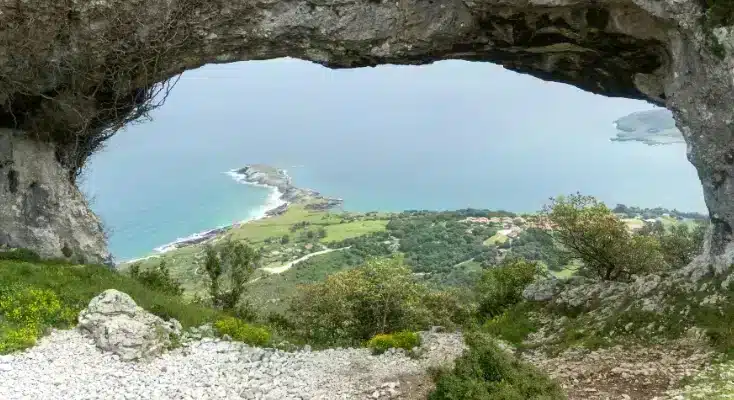
Which way do you think is perfect for you? Do you like the coast? Is hiking or mountaineering your passion? Are you a people person? In the following table, we explain which routes you can take, starting points, duration, difficulty and some key points to help you decide whether a route is right for you.
| Routes/Ways | Start | Distance | Duration | Difficulty | Ideal if… |
| French Way | Sarria | 115 km | 5-7 days | Low ⭐⭐☆☆☆ | you want a sociable, hassle-free experience. |
| Portuguese Way | Tui | 120 km | 5-7 days | Moderate ⭐⭐⭐☆☆ | you want to explore a less crowded route and are looking for peace and quiet, comfort and a moderate pace. |
| English Way | Ferrol | 120 km | 5-7 days | Moderate ⭐⭐⭐☆☆ | you want coastal routes that are not too physically demanding. |
| Primitive Way | Lugo | 100 km | 6-8 days | High ⭐⭐⭐⭐☆ | you want to see breathtaking landscapes and are physically fit or have experience in hiking. |
How to get to the Camino de Santiago from Madrid?
To get to Santiago from Madrid, you have a ton of options, from planes and trains to buses and cars. The connections are great. Let’s see which one is best for you!
Getting to Sarria from Madrid to do the French Way
If you are going to do the French Way (Madrid – Sarria), you have the option of flying to Santiago de Compostela and then taking a train or bus to Sarria. For a simpler option, there is also a direct train from Madrid-Chamartín to Sarria with Renfe. Finally, you may take a bus from Madrid to Lugo and then transfer to reach Sarria.
| Transport | Estimated duration | Frecuency | |
| ✈️ | Plane + bus | 1 hour and 15 min. + 3 hours bus | High |
| 🚆 | Train (AVE) | 4 hours | High |
| 🚌 | Bus (ALSA) + bus (MONBUS) | 8 hours | High |
Getting to Tui from Madrid to start the Portuguese Way
If you are going to walk the Portuguese Way, you may take a flight to Vigo and then travel 30 minutes by bus to Tui. Alternatively, there is a direct train to Vigo, and it is possible to travel by car, taxi or bus to the starting point. Finally, there is also a bus service to Tui.
| Transport | Estimated duration | Frecuency | |
| ✈️ | Plane + bus (MONBUS) | 1 hour and 10 min. + 30 min. bus | High |
| 🚆 | Train (AVE) + taxi/bus | 4 hours + 30/45 min. bus/taxi | High |
| 🚌 | Bus (ALSA) | 9 hours | High |
Getting to Ferrol from Madrid to start the English Way
If you are going to walk the English Way, we recommend taking a flight to A Coruña and then a bus to Ferrol. Another option is to take a train and then a bus. Finally, there is also a direct bus service.
| Trasport | Estimated duration | Frecuency | |
| ✈️ | Plane + bus | 1 hour and 15 min. + 50 min. bus | High |
| 🚆 | Train (AVE) + bus (MONBUS) | 4 hours + 1 hour bus | High |
| 🚌 | Bus (ALSA) | 9 hours | High |
Getting to Lugo from Madrid to do the Primitive Way
If you are going to do the Primitive Way, it is best to take a flight to Santiago and then a bus to Lugo. It is also possible to make this journey by train. Finally, there is the option of taking a direct bus.
| Transport | Estimated duration | Frecuency | |
| ✈️ | Plane + bus (MONBUS) | 1 hour and 15 min. + 2 hour bus | High |
| 🚆 | Train (AVE) | 5 hours | High |
| 🚌 | Bus (ALSA) | 7 hours | High |
Extra tip 🙂: if this is your first Camino, plan everything ahead of time, travel light, and be open to surprises. Whether it's the landscapes, the people, or moments of reflection, the Camino de Santiago begins long before you set foot on the trail. And remember: it doesn't matter where you start, but how you experience it.
Contact us and start planning your adventure at your leisure. The Camino de Santiago awaits you… and so do we!
There is no path to follow, you make the path by walking
Antonio Machado