The Camino de Santiago, also known as the Way of St. James, is a network of pilgrimage routes leading to the shrine of the apostle Santiago in the Cathedral of Santiago de Compostela in Galicia, northwest Spain. This ancient pilgrimage has been undertaken by millions of people from all walks of life for over a thousand years, making it one of the most renowned pilgrimage routes in the world.
What is the Camino de Santiago Trail?
The Camino de Santiago Trail refers to the various routes that pilgrims can take to reach Santiago de Compostela. While the most popular route is the French Way, there are several other trails, each offering its own unique experiences and landscapes.
Camino de Santiago Trails
French Way Trail
The French Way, or Camino Francés is the most famous heavily traveled route. It stretches approximately 740 kilometers from Saint-Jean-Pied-de-Port in France to Santiago de Compostela in Spain.
Subscribe to our newsletter and receive our FREE Practical Guide to the Camino de Santiago. In this guide you will find all the information you need to start planning your Camino.
Portuguese Way Trail
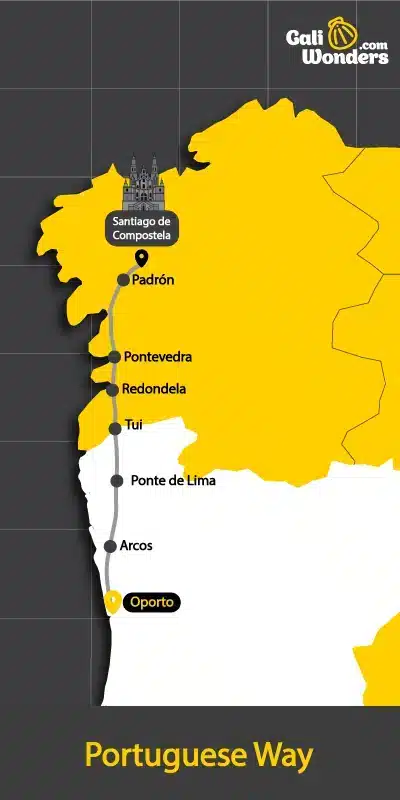
The Portuguese Way, or Camino portugués, starts in Lisbon or Porto and crosses into Spain, covering around 620 or 241 kilometers.
Portuguese Coastal Way Trail
This trail follows the coastline of Portugal and Spain, offering stunning ocean views along the way. it joins the Portuguese Way in Redondela and continues to Santiago de Compostela.
Northern Way Trail
The Northern Way or Camino del Norte, hugs the northern coast of Spain, passing through lush green landscapes and picturesque seaside towns. it begins in Irún or Vilalba and covers approximately 825 or 117 kilometers.
Primitive Way Trail
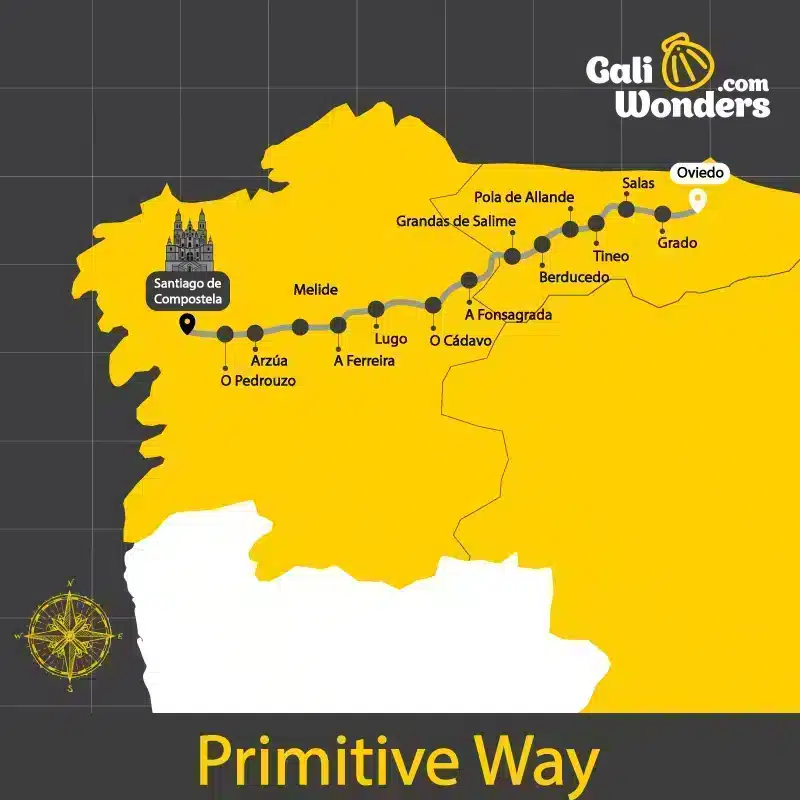
Also known as the Original Way, this route is the oldest Camino trail. It starts in Oviedo and crosses the rugged landscapes of Asturias before joining the French Way in Melide.
English Way Trail
The English Way or Camino Inglés was historically used by pilgrims from the British Isles. It starts in Ferrol or A Coruña and covers about 120 or 73 kilometers.
Finisterre Way Trail
The Finisterre Way, or Camino de Finisterre is an extension of the Camino de Santiago that continues from Santiago de Compostela to Cape Finisterre on the Atlantic Coast. It is believed to be the westernmost point of continental Europe.
How long does it take to walk the Camino de Santiago trails?
This is one of the most typical questions among pilgrims. We cannot give a single answer to this, because the duration of the pilgrimage along the Camino de Santiago varies depending on several factors. The route chosen is a determining factor, with longer routes, such as the French Way taking about 34 days to cover 740 kilometers, while shorter alternatives, such as the English Way or Finisterre Way, offer faster options. The pace of the walk, detours and side trips, weather conditions and your physical condition also influence the length of the journey.
What distance is each Camino de Santiago Trail?
As we said before, the kilometers of the Camino de Santiago depend on the specific route and the starting point chosen. Below you will find a table with the kilometers and the miles of each itinerary.
| Route | Mileage | kilometers |
|---|---|---|
| French Way | 499 miles | 740 km |
| Portuguese Way | 385 miles | 620 km |
| Portuguese Coastal Way | 385 miles | 620 km |
| Northern Way | 509 miles | 820 km |
| Primitive Way | 195 miles | 314 km |
| English Way (from Ferrol) | 77 miles | 118 km |
| English Way (from A Coruña) | 45 miles | 73 km |
| Vía de la Plata | 71 miles | 115 km |
| Finisterre & Muxía Way | 73 miles | 118 km |
| Atlantic Way | 129 miles | 209 km |
| Muros & Noia Way | 72 miles | 117 km |
| Winter Way | 158 miles | 255 km |
| Lighthouse Way | 99 miles | 160 km |
| Route of Father Sarmiento | 114 miles | 185 km |
| A Orixe Way | 85 miles | 138 km |
How to choose the right Camino de Santiago trail
For many first-time pilgrims, figuring out how to choose the best Camino de Santiago trail can be challenging. As you’ve probably noticed, there are so many options and factors to consider. We recommend doing thorough research to ensure you pic the Camino de Santiago trail that’s right for you.
Once the route has been chosen, it is essential to draw up a detailed itinerary that includes the daily distances covered, possible rest days and overnight stays. Remember that as a Camino de Santiago Travel Agency we design tailor-made itineraries adapted to your needs, preferences and budget and we book all the services for you.