Instagram Facebook-f Youtube

The Route of Father Sarmiento from Pontevedra

The Route of Father Sarmiento

The Route of Father Sarmiento (Ruta del Padre Sarmiento in Spanish) will take you into the heart of the region of O Salnés. This trail will allow you to emulate the journey made by Fray Martín Sarmiento in the Holy Year 1745, in his pilgrimage to Santiago de Compostela. In that year, he decided to return from Madrid to his native Galicia, and make a very personal pilgrimage from Pontevedra to Santiago de Compostela, following the coast line.

Included Services

Accommodation in a private room with private bathroom
Luggage transfer between stages
Breakfast included
Travel insurance
Route notes
Pilgrim's credential
24/7 telephone support

Optional Services

Private transfers (airport, city, etc.)
Upgrade to a superior room
Extra nights
Travel cancellation insurance
Visits and organized excursions

Travel information

Route of Father Sarmiento Stages

Arrival in Pontevedra, starting point of the Route of Father Sarmiento. It is a city characterized by its squares, its historic cobbled streets, and the strong connexion with the Way of Saint James.

Once we leave Pontevedra behind, we will move on to the next town, Poio. We will be able to contemplate its magnificent 7th century monastery, the Monastery of San Juan de Poio. In addition, the path will take us to one of the most picturesque villages of the Rías Baixas: Combarro. This stands out for its hórreos (raised granaries) and its small houses by the sea. We will finish the stage in Sanxenxo, a very popular tourist spot in the Galician summers. during his first trip to Santiago, in 1745, Father Sarmiento started to walk from Pontevedra. This is a little pedestrian city, so you should forget the car and any other kind of motor vehicle. Sounds good? You can have a walk in the old town, enjoy some tapas in some of the many bars and restaurants you can find in the city centre. Moreover, you could see how river Lerez joins to the Atlantic Ocean through Pontevedra Estuary. Pontevedra is ideal for those people who want to feel peace and get everywhere in less than 5 minutes on foot. Spring, summer and autumn are the best time to visit it. Anyway, winter is not very cold, but it’s really rainy. Thus, if you want to enjoy this experience, we highly recommend to do during the driest seasons. Pilgrims’ church – Route of Father Sarmiento Besides the Regional Museum (an important exhibition of Father Sarmiento is collected here), you will find several churches, a Basilica, a convent, a monastery and a National Parador (hotel). Furthermore, you can find many of the villages that Father Sarmiento visited before, during his trip in Galicia. After crossing Ponte do Burgo (Burgo bridge), you will find Poio town. Don’t miss the Monastery of San Juan de Poio. Did you know that a 200 meters’ mosaic is inside there representing the Camino de Santiago? “Would you like to get your tailor-made itinerary? ⇐ Click Walking along the coastline, you will soon reach Combarro. Have you ever heard about this seafaring village where stonecrosses and granaries seem to be touching the sea? Ahead, you will pass Samieira, Raxó and just before arriving in Sanxenxo, you can enjoy a beach, known as Areas. Are you ready to soak your feet? Finally, you will arrive at the end of the first stage of the Father Sarmiento Route. Sanxenxo is the most popular village for tourism in Rías Baixas. There are a great variety of hotels and spas there. Sanxenxo is a bustling place during the summer. Furthermore, beaches here are mostly urban, so as soon as you leave the hotel, you may step on white and fine sand.

Father Sarmiento route continues towards Portonovo. You will get into a more natural and uncrowded area. In fact, you can enjoy an incredible sunset from Punta Faxilda. Look at the distance… Ons and Onza isles are dominating the panoramic. Moreover, you will find amazing beaches in O Grove, but A Lanzada beach is one of the most spectacular. It’s a 2500 meters’ sandy area, where you can also find a chapel. Father Sarmiento also wrote about this hermitage and the remains of an old lighthouse next to it. Did you know that this lighthouse was built to protect Compostela against invaders? Apart from this, seafood in O Grove is excellent. Do you fancy to enjoy the best quality of shellfish and Albariño wine? To conclude, Father Sarmiento route ends today in O Grove. You may opt by walking a circular 3rd stage from O Grove to A Toxa isle. Otherwise, if you don’t have time enough to spend on this sealing land, we recommend you to enjoy the rest of the day discovering this valuable isle. Optional stage – circular A Toxa Island Firstly, you need to know that a 146 meters’ bridge connects A Toxa Island to O Grove. La Toja soap rings the bell? La Toja is mostly famous for its spa, its scallops’ covered chapel (12th century), and cosmetics and soaps factories. Father Sarmiento wrote that the island seemed to be inland in the past, as you could cross when there was low tide. Nowadays, you find a 5-star hotel, a casino, a golf club, as well as several nautical activities. So, if you want to spend a good time, this is a great place for it.

For those who wish, it is possible to stop one more day in the O Grove peninsula, and take the circular route. This is an area with a lot to see, and it is worth adding an extra day to visit all its attractions. From La Toja Island, San Vicente and its beaches, the Adro Vello, the port of Meloxo, Mount Siradella… A must for those who want to enjoy the charms of the region.

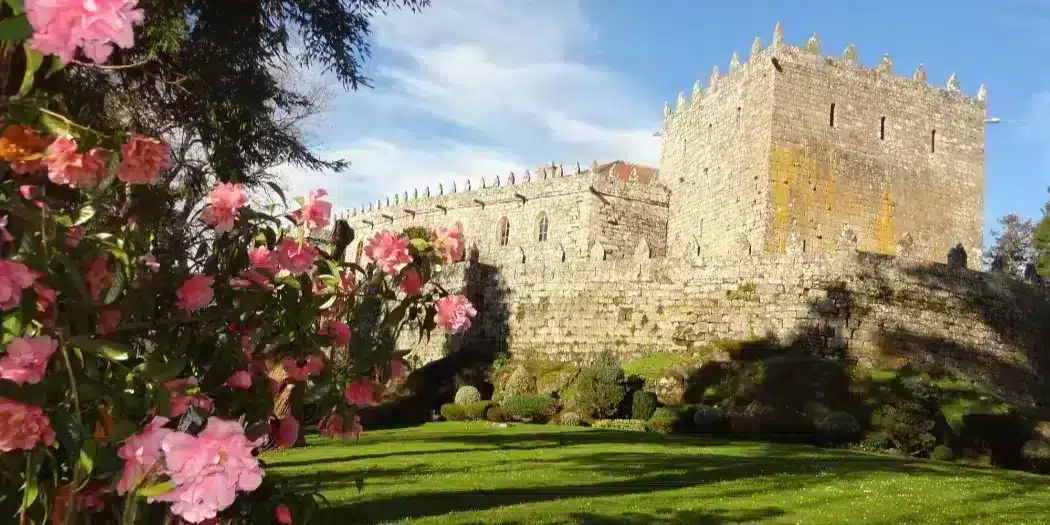
After leaving O Grove, you will continue to the Albariño land: Cambados. The Father Sarmiento route crosses a big and living estuary. Hundreds of birds coexist within that ecosystem characterized by a saline’s area. In fact, the name of Salnés was given by this particular zone. Not only there is nature here but also some interesting buildings: As Telleiras (18th century). They are like a big kiln where people fire the clay, plentiful in this area, in order to make tiles and bricks. The tower of San Sadurniño, the Pazo de Montesacro (18th century) or the Museum Casa do Pescador at Santo Tomé quarter, are great examples of the heritage and architectonic wealth on this stage. Eventually, reaching the end of this journey… how about a walk through the old town? You can see Pazo de Fefiñanes (16th century). Did you know that this was the first wine cellar to bottle an Albariño harvest, in 1928?

We will walk a shorter stage than the previous ones, and it will take us to the Island of Arosa (or Illa de Arousa). Among the points of interest of this paradisiacal island, we can find the port of “O Xufre” (from where boats leave for tourist routes in the area), the Lighthouse “Punta Cabalo”, or the Mirador de Con do Forno.

A new journey is coming! Enjoy the walk back to the peninsula. You won’t miss the peculiar smell of the Atlantic coast on your way to Carreirón Natural Reserve. More and more fine sand beaches and clean waters are waiting for you. Look at the sky or the trees, you could find a migratory bird at any place. Then, you will reach Vilanova de Arousa. After discovering Santiago Apostle sepulcher in Iria Flavia, Vilanova de Arousa was a barrier to protect Compostela from invaders. In short, several churches, palaces, and also towers characterize this village. Moreover, vineyards define the landscape, where sea and mountain merge. Ruta Padre Sarmiento viñedos

Father Sarmiento visited many villages in his route, and Vilagarcía de Arousa is one of them. Villa García, as he wrote, is in the middle way between Carril and Villajoan (Vilaxoán). Furthermore, Father Sarmiento mentioned that Vilaxoán was an important port in the past. That’s because it was perfect for big boats as there was enough depth of water. Currently, it’s also famous, for its charm. Moreover, mussels, clams and other mollusk are abundant here. Although this village was independent in the past, it was join to Vilagarcía de Arousa council since 20th century. Salted fish factories were the main activity here in the past, but, did you know that it was the first fisher’s village to put a trough in the Galician Coast? Moreover, between every places Father Sarmiento visited in this area, you will see San Martin de Sobrán church. You will find here a Saint Benedict Altar, religious order of Father Sarmiento. Finally, you should not forget to visit Pazo O Rial. It’s a hotel nowadays, but it was the residence of a famous marquis in the past. Father Sarmiento told that it was one of the most amazing palaces in the area.

The route of Father Sarmiento runs along the river Ulla on this stage. Today you will head to the north, crossing some of the villages that Father Sarmiento visited back then. From Vilagarcía de Arousa you will arrive to Carril quickly. You will only need to cross the beach Compostela and arrive in the land of the best clams in Galicia. Now, if you didn’t do yet, don’t forget to stop and contemplate the sea and the isle of Cortegada (also known as Isla de Los Laureles (Laurel isle)). This little island keeps the biggest ancient laurel forest that exists in Europe. Then, you will see Torres del Oeste (West Towers) upriver. They protected Santiago de Compostela from the attacks coming from the Atlantic Ocean. Traslatio Variante Espiritual A boat departs to run the Traslatio from Vilanova de Arousa to Pontecesures. Click ⇒ If you want to get more information about Traslatio & Spiritual Variant Route Along the route of Father Sarmiento, you will also see the only maritime and fluvial Via Crucis all over the world. In addition, river Ulla was the origin of all the Caminos. That’s because along this river, the remains of St. James sailed in a “stone” boat. In conclusion, the Ulla river is the forefather of the Camino de Santiago, as well as the cruceiros “stonecrosses” are the protectors of unequalled landscape. Traslatio – Variante Espiritual We are reaching the end of the Route of Father Sarmiento, and Pontecesure, which is just next to Padrón. You will now cross the bridge over the Ulla river and after 1 kilometre, you will get to the town centre. Moreover, Santiago de Padrón church keep the stone that gave origin to Padrón: el Pedrón. Did you know that this stone was the same one where the Santiago’s disciple tied the boat that carried the apostle remains from Jerusalem? Pedrón – Padrón

The last stage of Father Sarmiento Route runs along the Portuguese Camino & Portuguese Coastal Way. So, you will join many other people from here to Santiago de Compostela. Then, you will pass Iria Flavia from Padrón, and ahead, A Escravitude. Father Sarmiento wrote about a big and nice hermitage in this town. He said that it had a high and good tower. This is the Santuario da Virxe da Escravitude. Although it has two towers nowadays. They modified it during the following decades, in fact it was built on 18th century with a sole tower. Later, the second tower was built in the 19th century. Additionally, in Teo you will see Castro Lupario. It’s an iron age settlement, but it’s also related to the traslatio. According to the legend, after arriving in Padrón, Santiago disciples were to find a place to bury the remains of Santiago. So they found this place. At that moment, it was the residence of the Queen Lupa. So, she told them to go to Sacral Mountain. They would find there some oxes to carry the remains towards Monte Libredón.

Finally, you will arrive in Santiago de Compostela. You will complete one of the most specials routes to Compostela. You will leave those ports, rivers, towns, churches and palaces that Father Sarmiento visited in the past behind. Following the steps of the route of Father Sarmiento is one of the most special ways to meet the country of a thousand rivers. Furthermore, you will take part of the Galician culture and breathe the air of the great Atlantic Ocean. Apart from this, you will see different landscapes, such as sea and mountains, rivers and forests, islands and even updated towns with the same spirit than in the past. What are you waiting to come and join to the Route of Father Sarmiento? Don’t hesitate to contact us and ask for your own custom itinerary. Galiwonders Team will give you all the keys to enjoy an unforgettable experience!

Map of the Route of Father Sarmiento

Difficulty: Medium

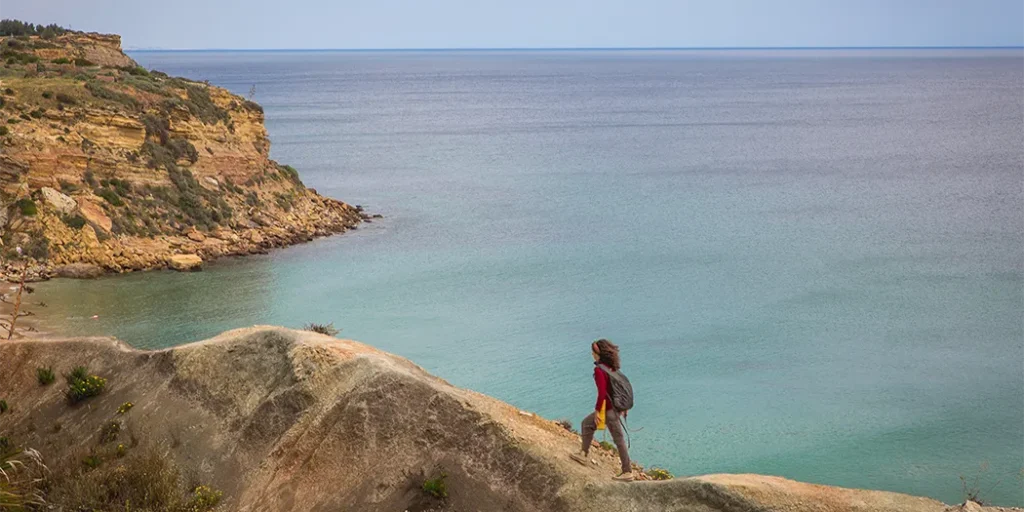
The Padre Sarmiento Route is a walking tour suited to anyone with a normal level of fitness who enjoys walking. It follows the coast of O Salnés, mostly over flat or gently rolling terrain, with a few short climbs. There are no technical sections.

Distance and pace. The route covers around 162 km in 8 stages, ranging from 11.9 km to 25.3 km. The longest days are Pontevedra – Sanxenxo, Vilagarcía – Padrón and Padrón – Santiago, so a steady pace is needed on those.

Terrain. You will walk on a mix of dirt paths, country tracks, seaside promenades, some sandy stretches next to the beaches, and sections of asphalt or minor roads through villages and vineyards.

Weather. Galicia’s climate is changeable, and rain is possible at any time of year. Near the sea it can also be windy and humid. We recommend comfortable, well broken-in walking shoes, layered clothing and a waterproof jacket.

Luggage. We take care of your luggage transfers between hotels, so you only need to carry a small daypack.

Recommended for: beginner walkers with some walking habit, families with older children, and anyone looking for a quiet alternative to other Camino routes.

1* and 2* hotels

These hotels offer private rooms with private bathrooms, as well as other additional services that may vary depending on the category, such as restaurant service, television, room service, laundry, ironing, etc. It is common to stay in this type of hotel in the cities along the Camino.


Hostels and guesthouses


These accommodations provide the essential services to meet basic hygiene and rest needs at a more moderate price than hotels. . Officially, hostels and guesthouses are classified as 1-star accommodations. However, this rating should not be taken into account when assessing the level of comfort and quality of their services.


What to see on the Padre Sarmiento Route

The Padre Sarmiento Route follows the coast of O Salnés in the Rías Baixas, from Pontevedra to Santiago de Compostela. It passes fishing villages, white-sand beaches, pazos (Galician manor houses), vineyards and Jacobean heritage.

Towns and sights along the way

Pontevedra and Poio

  • Pontevedra has a pedestrian-friendly old town with squares and tapas bars.
  • The Monastery of San Xoán de Poio has a mosaic of about 200 metres dedicated to the Camino de Santiago.

Combarro

  • One of the most photographed fishing villages in Galicia, with its hórreos (granaries), stone crosses and sea-front houses.

Sanxenxo and Portonovo

  • Lively beaches and the most popular seaside resort of the Rías Baixas.
  • Viewpoints such as Punta Faxilda offer sunsets with the Ons and Onza islands in the distance.

A Lanzada and O Grove

  • A Lanzada beach: a sandy stretch of about 2.5 km, with a Romanesque chapel and archaeological remains.
  • O Grove: known for its seafood. You can add a side trip to A Toxa Island, famous for its spa, its chapel covered in scallop shells and its soaps.

Cambados: the capital of Albariño

  • A historic centre with pazos such as Fefiñanes, plus wineries offering tastings.
  • Salt marshes and wetlands, which give the O Salnés area its name.

A Illa de Arousa

  • One of the most scenic stages. You pass the A Seca tide mill, one of the few left in Galicia, and cross the bridge onto the island.

Vilanova de Arousa

  • Birthplace of the writer Valle-Inclán, with his house museum. The route meets the Spiritual Variant of the Portuguese Camino (Traslatio) here.
  • The Carreirón Natural Park is nearby and ideal for birdwatching.

Vilagarcía de Arousa and Carril

  • A port town with pazos such as O Rial, near the Isle of Cortegada and its unusual laurel forest.

Catoira, Pontecesures and Padrón

  • The Western Towers of Catoira, which once defended Santiago from attacks by sea.
  • In Padrón, the church of Santiago holds the Pedrón, the stone linked to the arrival of the Apostle.

The final stretch to Santiago

  • The route joins the Camino Portugués through Iria Flavia and A Escravitude, ending at the Cathedral of Santiago de Compostela.

Food and drink

  • Albariño wine from the Rías Baixas, with winery visits and tastings.
  • Fresh seafood: clams, mussels, oysters and octopus.
  • Fish and tinned seafood, a strong tradition on A Illa de Arousa.

About Padre Sarmiento

Fray Martín Sarmiento was a Benedictine monk and Enlightenment scholar, raised in Pontevedra. In 1745, a Holy Year, he returned to Galicia from Madrid and walked from Pontevedra to Santiago following the coast. He recorded his journey in the Viaje a Galicia. The route lets you retrace his steps through the same landscapes.

From Santiago de Compostela Airport

  • Car: It is 75km with a duration of approximately 50 minutes.
  • Bus/train: Take the bus (LINE 6A) from Santiago de Compostela airport to the bus station. Frequency every 15′ and with an approximate duration of 20′. Another option is to take a cab to the station, with an estimated duration of 15′. Then, we must take a bus (monbus) or train (renfe) to Pontevedra (journey time between 40 minutes to 1 hour). For timetables and more information visit: https://tussa.org/, www.monbus.es  and www.renfe.com

From Vigo Airport

  • Car or cab: It is 30km with a duration of approximately 25 minutes.
  • bus/train: Take the bus (LINE A) from Vigo Airport to the Urzaiz stop (Estación / Cotomondongo wall). Frequency every 30′. Another option is to take a cab to the station, with an estimated duration of 10′. Once there, we can take a bus or train to Pontevedra (journey time between 13 to 30 minutes). For schedules and more information visit: www.vitrasa.es, www.monbus.es and www.renfe.com 

From Porto Airport

  • Car or cab: It is 170km with a duration of approximately 1h 45 minutes.
  • Bus: Take a bus from Porto to Pontevedra (Alsa or Flixbus) (2h 40 minutes). For timetables and more information visit: www.alsa.es and www.flixbus.es

Customer reviews

Receive your quote in less than 24 hours!
Ruta del Padre Sarmiento

TOUR SUMMARY

DISTANCE: 185 Km
STAGES: 9
DURATION: 10 Noches
DIFICULTY: 3/5
STARTI: Pontevedra
PRICE: desde 770€

Why book with Galiwonders?

The Camino. Tailor-made

We will design an itinerary tailored to your needs, preferences, and budget, and we will book all services for you. You just enjoy the journey.

We are on the Way

Galicia is our home. We have traveled all the routes of the Camino and have direct contact with service providers on the Camino.

We are also travelers.

We speak several languages, have lived abroad, and have years of experience organizing trips for people from all over the world.

An unforgettable experience

Hundreds of pilgrims repeat the experience of traveling with us year after year. We want you to be one of them. And that's why we will strive to make your trip unique and unforgettable.

Request your itinerary
Fill up the form and get your itinerary in your email address in 24-48h.
Solicite seu itinerário
Preencha o formulário e você receberá o orçamento em seu e-mail em 24-48h.
Fordern Sie Ihre persönliche Reiseroute an
BLACK FRIDAY PROMO

GET 10% OFF

Confirm your reservation between 21/11 and 02/12.

Demandez votre itinéraire
Remplissez le formulaire et vous recevrez votre itinéraire sur mesure par e-mail dans les 24h.
Richiedi il tuo itinerario
Compilate il modulo e riceverete il preventivo nella vostra e-mail entro 24-48 ore.
Solicita tu itinerario
Rellena el formulario y recibirás el presupuesto en tu email en 24-48h.