Best Routes for the Camino in 6 Days
The best route for the Camino de Santiago in 6 days depends on whether you prioritise atmosphere, coastline, tranquillity or easier logistics.
French Way from Sarria
The French Way from Sarria is one of the most popular choices for a six-day Camino.
From Sarria to Santiago, the route covers approximately 115 km, making it long enough to meet the minimum walking distance required for the Compostela.
The trail passes through Portomarín, Palas de Rei, Melide, Arzúa and O Pedrouzo before reaching Santiago.
It is particularly suitable for:
first-time pilgrims;
travellers looking for a social Camino atmosphere;
those who want frequent services along the route;
and pilgrims who prefer moderate stages.
With six days available, the route can be divided into balanced walking stages rather than concentrating the distance into five longer days.
Portuguese Way from Tui
The Portuguese Way from Tui is another excellent choice for a 6 day Camino itinerary.
Starting in Tui, on the border between Spain and Portugal, the route continues through O Porriño, Redondela, Pontevedra, Caldas de Reis and Padrón before reaching Santiago.
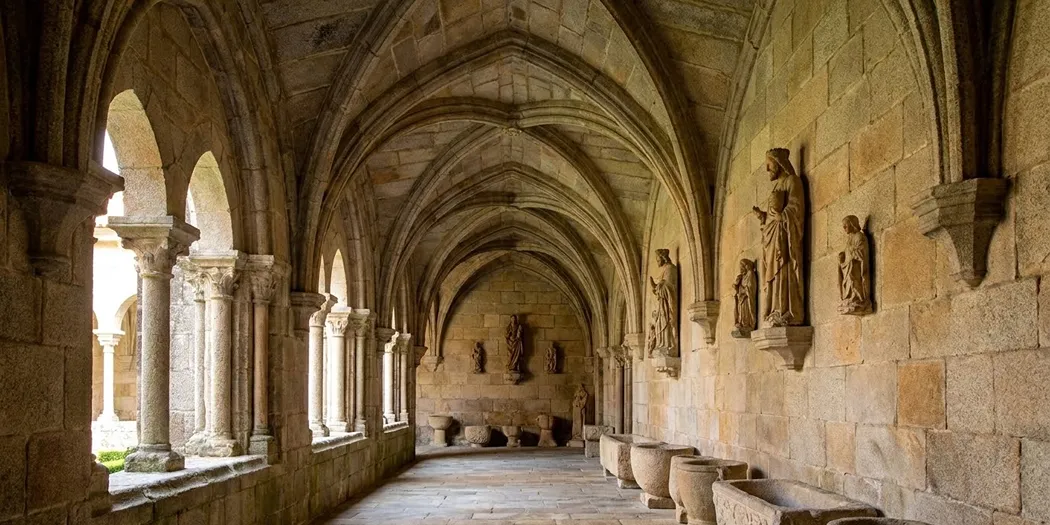
The terrain is generally manageable and there are frequent towns and services along the way.
It is a good option if you want:
a quieter alternative to the French Way;
relatively balanced stages;
historic towns;
and a mix of woodland, rural trails and urban sections.
Coastal Portuguese Way from Baiona
The Coastal Portuguese Way is especially appealing if you want part of your pilgrimage to follow the Atlantic coast.
Starting from Baiona allows you to enjoy the coastal landscapes of the Rías Baixas before the route joins the inland Portuguese Way farther north.
You will pass through Vigo, Redondela, Pontevedra, Caldas de Reis and Padrón on the way to Santiago.
This route is ideal for pilgrims looking for:
sea views;
coastal towns;
seafood and local gastronomy;
and a combination of coast and countryside.
Accommodation demand can be high during summer, so advance booking is particularly advisable.
English Way from Ferrol
The English Way from Ferrol covers roughly 118 km to Santiago.
Historically, this route was used by pilgrims arriving by sea from northern Europe before continuing on foot to Compostela.
It is generally quieter than the French Way and offers a mix of coastal scenery, green countryside and historic Galician towns.
Some stages include noticeable climbs, but a six-day itinerary allows the distance to be distributed at a reasonable pace.
Primitive Way from Lugo
The Primitive Way from Lugo allows you to walk just over 100 km to Santiago while avoiding the most demanding mountain stages of the full route through Asturias.
From Lugo, the Camino crosses rural Galicia before joining the French Way in Melide.
This option is particularly suitable if you want:
history and Roman heritage;
quieter early stages;
rural scenery;
and a slightly more challenging alternative to Sarria or Tui.
Via de la Plata from Ourense
The Via de la Plata from Ourense offers another possible six-day pilgrimage to Santiago.
This section crosses inland Galicia through small villages and peaceful rural landscapes.
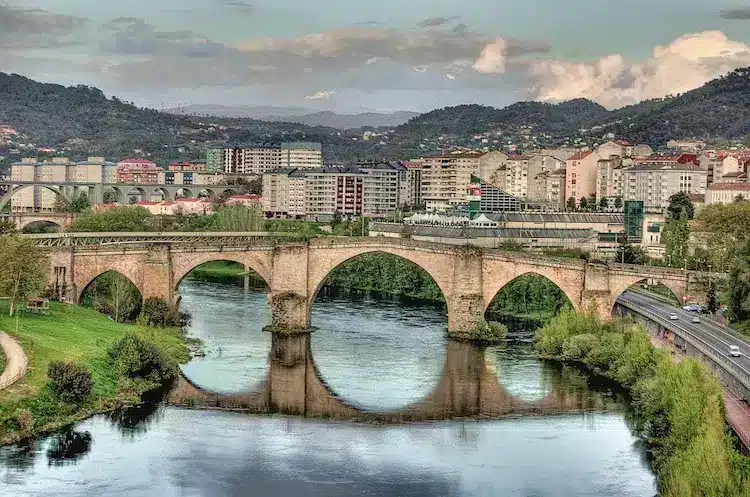
Some stages are more demanding because of the elevation profile, so it tends to suit pilgrims with some previous walking experience or those looking for a quieter route.
Day-by-Day Itinerary: Camino de Santiago in 6 Days
For a first Camino, the French Way from Sarria is one of the most practical itineraries for six days.
It covers enough distance to qualify for the Compostela while keeping most stages within a manageable daily range.
| Day | Stage | Approx. distance | Difficulty | Highlights |
|---|---|---|---|---|
| 1 | Sarria – Portomarín | 22 km | Moderate | Rural Galicia and Portomarín |
| 2 | Portomarín – Palas de Rei | 25 km | Moderate | Countryside and small villages |
| 3 | Palas de Rei – Melide | 15 km | Easy-moderate | Melide and Galician cuisine |
| 4 | Melide – Arzúa | 14 km | Easy | Woodland and Arzúa |
| 5 | Arzúa – O Pedrouzo | 19 km | Moderate | Forest paths and rural villages |
| 6 | O Pedrouzo – Santiago | 19-20 km | Moderate | Monte do Gozo and Santiago Cathedral |
This Camino de Santiago 6 days itinerary gives you a good balance between walking time and recovery.

If you prefer shorter stages, the route can be adjusted by changing overnight stops or adding extra nights.

Tips for Planning Your 6-Day Camino
Choose the right time of year
Spring and early autumn are among the most popular periods for walking because temperatures are generally suitable for long-distance hiking.
Summer offers longer daylight hours but also brings greater demand for accommodation, especially on the most popular routes and in coastal destinations.
Winter tends to be quieter, although some accommodation and services may operate on reduced schedules.
Bring only essential equipment
For a six-day walking pilgrimage, you do not need to carry a large amount of equipment.
Useful essentials include:
comfortable walking shoes that you have already worn;
technical socks;
lightweight, breathable clothing;
a waterproof jacket;
sun protection;
a reusable water bottle;
a small first-aid kit;
and your pilgrim passport.
Avoid wearing brand-new footwear on the Camino.
Use luggage transfer
Walking six consecutive days with a heavy backpack can increase fatigue and discomfort.
With a luggage transfer service, your main suitcase or bag is transported between accommodations while you walk with a small daypack.
This allows you to carry only water, documents, food and the essentials needed for each stage.
Book your accommodation in advance
Accommodation can fill quickly during peak periods, particularly on popular routes such as the French Way and Portuguese Way.
Booking in advance gives you more choice and allows you to organise each stage around a confirmed place to stay.
Galiwonders offers private accommodation Camino options so you can rest comfortably at the end of each walking day.
Remember your pilgrim passport
Your pilgrim passport or Credential del Peregrino records your journey and is essential if you plan to apply for the Compostela.
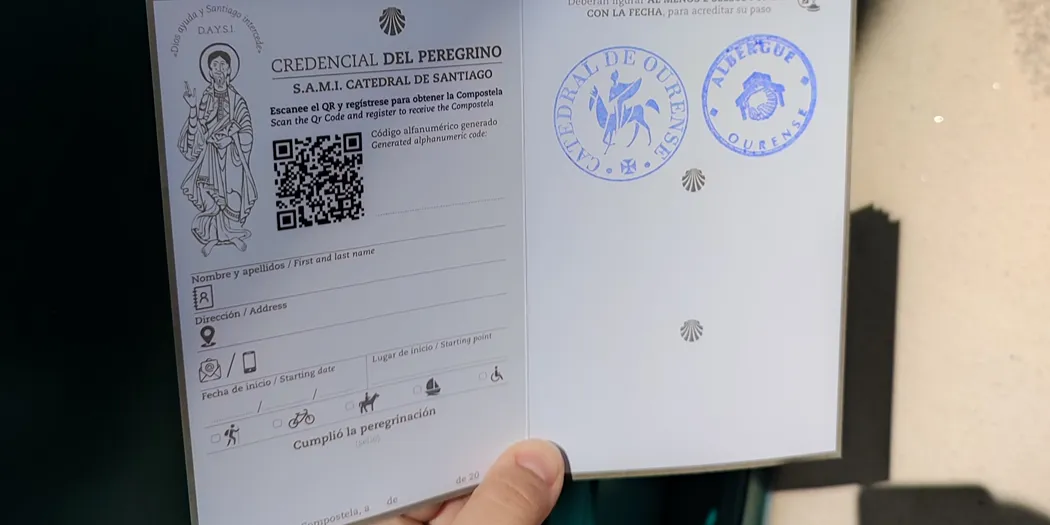
You can collect stamps at different establishments and recognised points along the Camino.
Make it part of your daily routine so you do not reach Santiago with an incomplete credential.