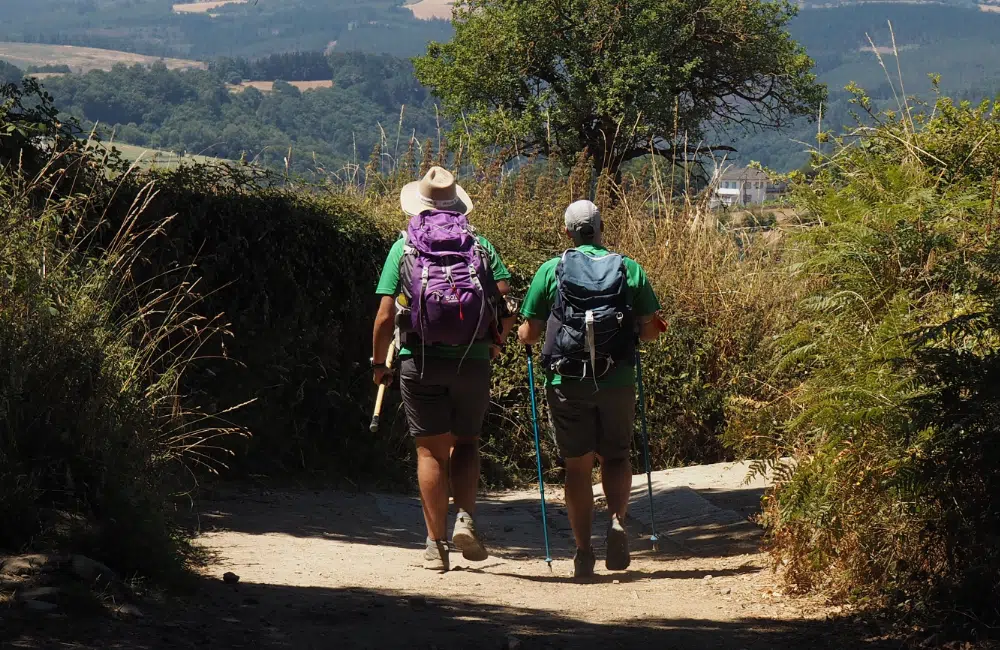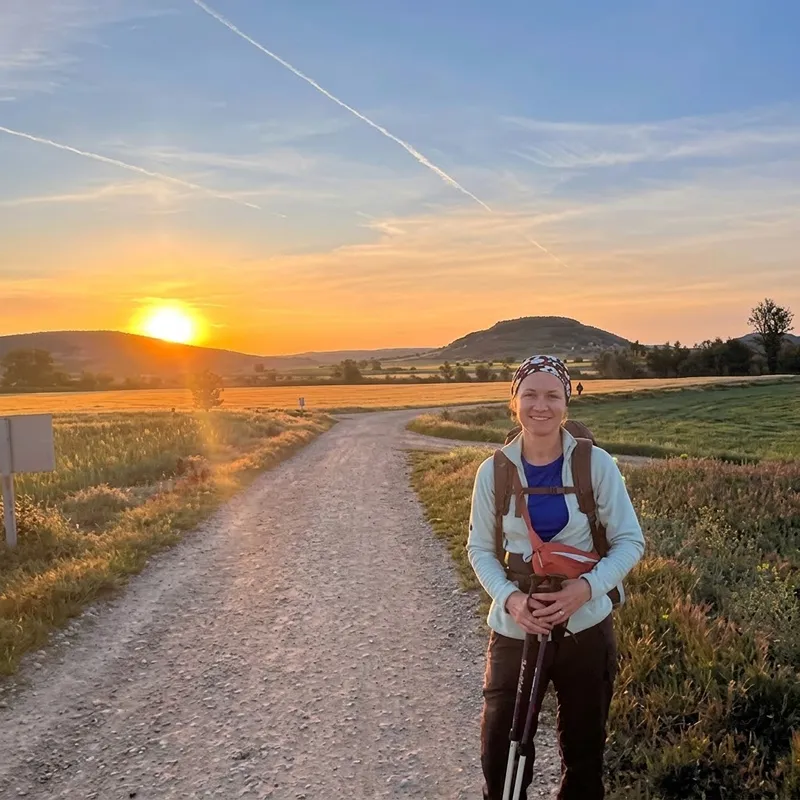

Can you do the Camino de Santiago in 4 days? Yes. Four days are enough to enjoy a meaningful section of the Camino, especially if you choose the right route and plan your stages carefully.
A typical 4 day Camino itinerary covers around 50-62 miles (80-100 km) on foot, depending on the terrain and your walking pace. That means it is possible to reach the minimum distance required for the Compostela, although doing so usually involves walking close to 15-16 miles (24-25 km) per day.
The best option depends on your goal. Some travelers want to reach Santiago and earn the Compostela. Others simply want to experience a few days of this historic walking pilgrimage in Spain without turning the journey into a race.
| Days | Recommended route | Approx. distance | Compostela? |
|---|---|---|---|
| 4 days | Selected sections of the Camino Francés or Camino Portugués | 50-62 miles / 80-100 km | Yes, if the minimum distance is completed |
For first-time pilgrims, four days can be an excellent introduction to the Camino. The key is choosing an itinerary that matches your fitness level, available time and priorities.
Is 4 Days Enough for the Camino de Santiago?
Yes, 4 days are enough for the Camino de Santiago if your goal is to experience part of the route rather than complete one of the long-distance Caminos from beginning to end.
Most pilgrims walk around 12-16 miles (20-25 km) per day. Over four days, this usually means a total distance of roughly 50-62 miles (80-100 km).
This is enough time to experience many of the elements that define the Camino:
- Walking through historic towns and rural villages.
- Meeting other pilgrims.
- Following the traditional yellow arrows and scallop-shell markers.
- Carrying and stamping your Pilgrim Passport.
- Experiencing several consecutive days on the trail.
For beginners, four days can be more manageable than committing to a one- or two-week pilgrimage.
However, if your goal is to walk the full Camino Francés from Saint-Jean-Pied-de-Port, four days are nowhere near enough. That route normally takes several weeks.
A 4 day pilgrimage to Santiago is therefore best understood as a short but authentic section of the Camino.
⭐ EXPERT TIP: If four days aren’t enough to comfortably complete the 100 km, you can split the Camino into several trips. Many pilgrims walk a few stages at a time and continue weeks, months, or even years later. Keep your pilgrim credential and continue collecting stamps when you resume your journey.
Best Routes for the Camino in 4 Days
There is no single best route for everyone.
The best route on the Camino de Santiago depends on whether you prioritize reaching Santiago, walking along the coast, choosing an easier profile or avoiding the busiest sections.
Camino Francés: a classic first Camino
The Camino Francés is the best-known route and one of the easiest to organize.
It is particularly suitable for:
- First-time pilgrims.
- Travelers who want a strong Camino atmosphere.
- Those looking for frequent services and accommodation.
- Pilgrims who want to meet other walkers along the route.
In four days, you can walk a selected section of the final Galician stages.
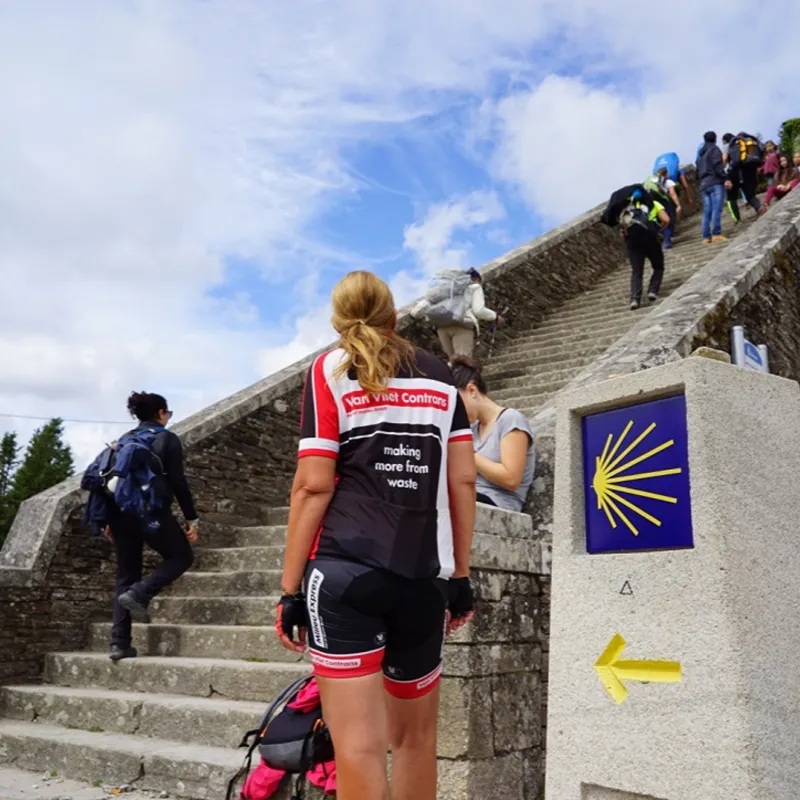
If your priority is the Compostela, the departure point must be chosen carefully so that your itinerary reaches the required walking distance.
For travelers who want the most recognizable version of the Camino, the Francés remains one of the strongest options.
Suscríbete y recibe GRATIS en tu correo la Guía Completa del Camino de Santiago: rutas, checklist de equipaje, consejos prácticos, curiosidades y todo lo que necesitas para planificar tu aventura. Además, obtén un 5% de descuento en tu primera reserva válido durante los 30 días siguientes a la recepción de la guía.

¡Consigue tu guía ahora!
Registrándote aceptas recibir la guía del Camino en PDF e información práctica sobre las rutas del Camino de Santiago y un 5% de descuento en tu primera reserva válido durante los 30 días siguientes a la recepción de la guía.
Responsable de datos: Galiwonders, S.L.U.
Finalidad: Gestionar las suscripciones, envío de comunicaciones y tratamiento de datos conforme a las finalidades indicadas en nuestra política de privacidad.
Legitimación: Consentimiento de los interesados.
Destinatario: Proveedores, colaboradores y desarrolladores. Fuera de esos campos no se cederán datos a terceros, salvo obligación legal.
Derechos: Acceder, rectificar y suprimir los datos, así como otros derechos, tal y como se explica en nuestra política de privacidad.
Camino Portugués: inland route
The Camino Portugués is another excellent choice for a short itinerary.
A popular starting point in Galicia is Tui, close to the Portuguese border.
From there, the route continues through O Porriño, Redondela, Pontevedra and other historic towns before reaching Santiago.
The inland Camino Portugués works particularly well for travelers who want:
- Moderate terrain.
- Frequent towns and services.
- Relatively easy logistics.
- A good balance between countryside and urban stops.
Walking all the way from Tui to Santiago in only four days would require long stages, so many pilgrims prefer to complete part of the route in four days or allow additional time.
Camino Portugués Coastal Route
The Camino Portugués Coastal Route offers a very different experience.
One option is to begin in A Guarda and walk north toward Baiona, Vigo and Redondela.
This route is ideal for travelers who prefer:
- Atlantic Ocean views.
- Coastal landscapes.
- Fishing villages.
- Beaches and seaside promenades.
- A generally quieter Camino experience.
A four-day itinerary from A Guarda works particularly well if reaching Santiago is not essential on this trip.
Camino Inglés: a quieter alternative
The Camino Inglés is another interesting possibility.
Traditionally used by pilgrims arriving by sea from northern Europe, it begins in places such as Ferrol and continues through northern Galicia toward Santiago.
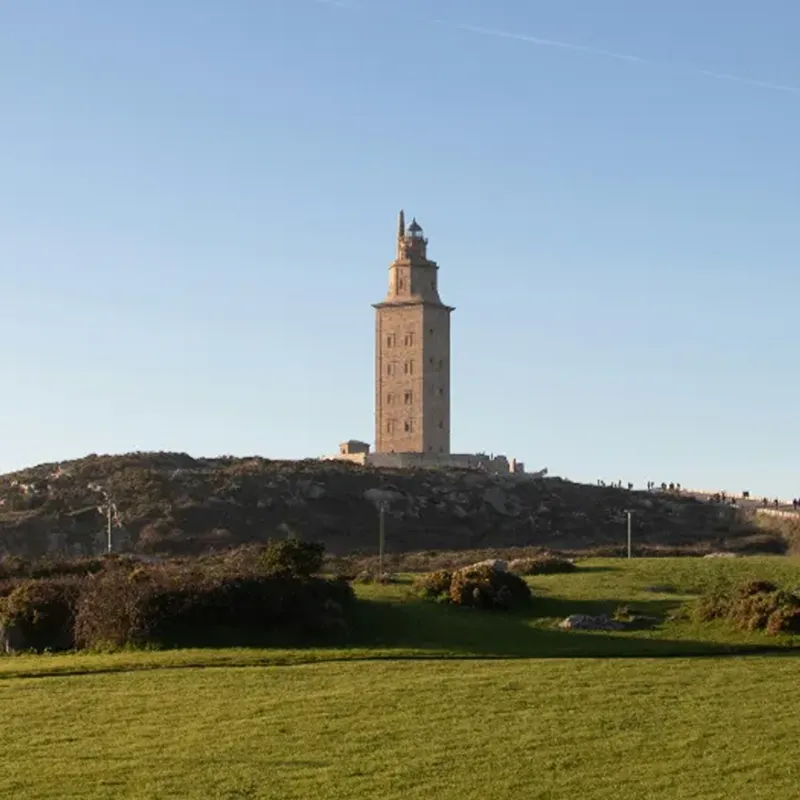
It is a good choice for travelers who:
- Prefer fewer crowds.
- Enjoy historical routes.
- Want a quieter atmosphere.
- Have already experienced the Camino Francés or Camino Portugués.
Four days allow you to cover a substantial part of the route, although completing the entire Camino Inglés at a comfortable pace usually requires more time.
| Route | Suggested starting point | Approx. distance in 4 days | Best for |
|---|---|---|---|
| Camino Francés | O Cebreiro | 50-56 miles / 80-90 km | Nature and mountain scenery |
| Camino Portugués Coastal Route | A Guarda | 50-56 miles / 80-90 km | Ocean views and coastal landscapes |
| Camino Inglés | Ferrol | 50-62 miles / 80-100 km | Quiet trails and heritage |
| Camino Primitivo | Partial section | 43-56 miles / 70-90 km | Experienced pilgrims |
Day-by-Day Itinerary: Camino de Santiago in 4 Days
For a balanced first experience, one option is to walk four stages of the Camino Portugués from Tui.
This itinerary focuses on comfortable daily distances rather than rushing to Santiago.
| Day | Stage | Distance | Difficulty | Highlights |
|---|---|---|---|---|
| 1 | Tui – O Porriño | 11-12 miles / 18-19 km | Easy-moderate | Tui Cathedral and historic center |
| 2 | O Porriño – Redondela | 9-10 miles / 15-16 km | Moderate | Views toward the Vigo estuary |
| 3 | Redondela – Pontevedra | 12 miles / 19-20 km | Moderate | Pontevedra historic center |
| 4 | Pontevedra – Caldas de Reis | 14 miles / 22-23 km | Moderate | Thermal springs and old town |
This is a good example of a Camino de Santiago 4 days itinerary designed around reasonable stages.
It does not reach Santiago within four days, but it offers a much more relaxed experience than trying to cover the full Tui-Santiago route at an aggressive pace.
If reaching Santiago is your main priority, your itinerary will need to begin closer to the city or include longer daily stages.
⚠️ Before choosing your itinerary, ask yourself one key question: what matters most to you — reaching Santiago, earning the Compostela, or enjoying the Camino at a comfortable pace?
Can You Get the Compostela in 4 Days?
Yes, it is possible to get the Compostela in four days, but only if you complete the required minimum distance.
The main Compostela certificate requirements include walking at least:
- 100 km / 62 miles on foot, or
- 200 km / 124 miles by bicycle.
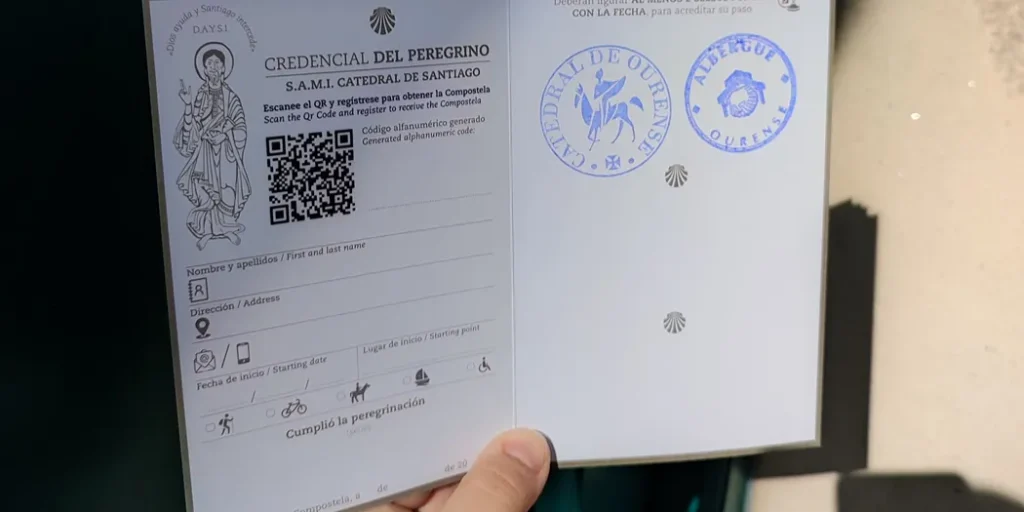
You must also carry a Pilgrim Passport, known in Spanish as the Credencial del Peregrino, and collect the required stamps along the route.
For a four-day walking itinerary, reaching 100 km means averaging approximately 25 km / 15.5 miles per day.
That is achievable for fit and experienced walkers, but it can feel demanding if you are new to long-distance walking.
This is why the starting point matters so much.
A traveler whose main goal is to obtain the Compostela may choose a more demanding itinerary, while someone prioritizing the overall experience may prefer shorter stages.
You can read more about the official requirements in our guide on how to get the Compostela certificate.
The Compostela and the Distance Certificate are both linked to your Camino, but they serve different purposes. Here’s a quick comparison to help you understand which one applies to your journey:
| Compostela | Distance Certificate |
|---|---|
| Confirms that the pilgrim has completed the minimum required distance and meets the conditions established for the pilgrimage. | Provides details about the route completed, including the starting point and total distance walked or cycled. |
| Requires meeting the official Compostela distance requirements. | Can serve as an additional record of the journey completed. |
| Best suited to pilgrims whose main goal is to qualify for the traditional pilgrimage certificate. | Useful for pilgrims who want a formal record of the distance and route they completed. |
❗Important: If you walk a shorter section that does not meet the Compostela requirements, your Camino experience is still completely valid, even if you do not qualify for the Compostela on that trip.
When you only have four days, it can be tempting to maximize every mile.
However, there is a big difference between walking 12 miles (20 km) and 19 miles (30 km), especially when you repeat that effort several days in a row.
For most pilgrims, an average of 12-16 miles (20-25 km) per day is a reasonable pace.
This gives you time to:
- Stop for lunch.
- Visit churches and historic towns.
- Rest during the day.
- Enjoy the landscapes.
- Arrive at your accommodation without feeling completely exhausted.
If earning the Compostela is your priority, you may need to accept longer daily distances.
The important thing is to remember that walking 15 miles once is very different from doing it four days in a row.
Tips for Planning Your 4-Day Camino
A short Camino still requires good preparation.
📅Choose the best time of year
Spring and early fall are often excellent times for a short Camino.
Temperatures are generally comfortable for walking, and conditions are usually less intense than during the hottest summer weeks.
Summer offers more daylight and the liveliest atmosphere, but it also brings more pilgrims and greater demand for accommodation.
Winter can be much quieter, but some services may close and the weather can be more demanding.
🏃Prepare before you travel
You do not need to be an athlete, but it helps to prepare your body for consecutive walking days.
In the weeks before your trip, try to complete several walks of 6-12 miles (10-20 km).
If possible, walk on two consecutive days to understand how your body responds to accumulated effort.
🎒Pack light
A short Camino does not require a large backpack.
Essential items include:
- Broken-in walking shoes or boots.
- Quick-drying clothing.
- Waterproof jacket.
- Reusable water bottle.
- Sun protection.
- Small first-aid kit.
- Pilgrim Passport.
The lighter your pack, the easier your daily stages will feel.
🚗Use luggage transfer
If you prefer walking with only a small daypack, consider using a luggage transfer service.
Your main bag is collected from your accommodation in the morning and delivered to your next overnight stop.
This can make a major difference during a short itinerary, especially if you plan to walk longer stages.
🏨Choose accommodation carefully
Pilgrims can choose between public albergues, private hostels, guesthouses and hotels.
Albergues offer a traditional Camino experience, while private rooms provide more comfort and privacy after a long walking day.
If you prefer guaranteed rooms and more predictable rest, you can arrange private accommodation Camino in advance.
Booking ahead is especially advisable during peak season, weekends and public holidays.
📝Carry and stamp your Pilgrim Passport
Your Pilgrim Passport, or Credencial del Peregrino, is one of the most important items on the Camino.
Pilgrims collect stamps from accommodations, churches, cafés, restaurants and other authorized locations along the route.
These stamps provide evidence of the journey and are required when applying for the Compostela.
Frequently Asked Questions
Is 4 days enough to walk the Camino de Santiago?
Yes. Four days are enough to experience a meaningful section of the Camino de Santiago.
Most pilgrims can cover around 50-62 miles (80-100 km) in that time, depending on their fitness level, route and daily distances.
It is not enough to complete one of the major long-distance routes in full, but it is an excellent option for a shorter pilgrimage.
Which route is best for 4 days?
The Camino Portugués and selected sections of the Camino Francés are among the best options for a four-day Camino.
The Camino Portugués is particularly appealing for travelers looking for moderate terrain and good infrastructure.
The Camino Francés is ideal for first-time pilgrims who want to experience the most traditional Camino atmosphere.
La opción más fácil dependerá de tu ritmo, condición física y objetivo.
Can I get the Compostela in 4 days?
Yes, provided that you walk at least 100 km / 62 miles or cycle at least 200 km / 124 miles and meet the credential-stamping requirements.
On foot, this usually means averaging close to 25 km / 15.5 miles per day over four days.
La mejor forma de calcular el presupuesto es hacerlo sobre un itinerario concreto, ya que cuatro días pueden organizarse con niveles de comodidad muy diferentes.
How many km per day on the Camino?
Most pilgrims walk around 20-25 km per day, equivalent to approximately 12-16 miles.
Beginners may prefer shorter stages, while experienced walkers sometimes cover 30 km or more.
The right daily distance depends on terrain, fitness level and how much time you want to spend enjoying the places along the route.
Do I need to book accommodation in advance?
It depends on the season.
During spring, summer and early fall, booking ahead is recommended, especially on popular routes such as the Camino Francés and Camino Portugués.
In quieter months, there may be less demand, but some accommodations can close seasonally.
For a short four-day Camino, reserving accommodation in advance makes the itinerary much easier to manage.
Plan Your Camino de Santiago in 4 Days
Four days are enough to experience the Camino in a meaningful way.
You can walk several stages, discover Galicia on foot and, with the right itinerary, even complete the minimum distance required for the Compostela.
The key is choosing a route that matches your fitness level, priorities and available time.
If you want help planning a Camino de Santiago package for 4 days, request your personalized itinerary and our team can create a route adapted to your dates, walking pace and travel preferences.