Instagram Facebook-f Youtube

Xacobeo 2027: What Is the Holy Year on the Camino de Santiago and Why It Matters

Xacobeo 2027, also known as the Camino Holy Year, Jacobean Holy Year or Compostelan Holy Year, will be the next Holy Year on the Camino de Santiago. It is celebrated because St James’ Day, 25 July 2027, falls on a Sunday, and the Holy Year will run from 31 December 2026 to 31 December 2027.

Following the extended 2021–2022 Holy Year, Xacobeo 2027 is expected to attract pilgrims from around the world and bring a particularly vibrant atmosphere to Santiago de Compostela and the different Camino routes.

In this guide, you’ll find the key dates, what changes during a Holy Year, which Camino route to choose, the best time to walk, and when to book your trip for 2027.

Xacobeo 2027 at a glance

What Is a Holy Year? Xacobeo, Jacobean and Compostelan Holy Year Explained

A Compostelan Holy Year is celebrated whenever St James’ Day, 25 July, falls on a Sunday. During that year, the Holy Door of Santiago Cathedral remains open, and pilgrims who meet the requirements established by the Catholic Church may receive the plenary indulgence.

The word Xacobeo is the Galician form of “Jacobean”. It is also the name used by the Xunta de Galicia for the cultural, tourism and pilgrim-welcome programme linked to the Holy Year. In 2027, this programme is also presented as Xacobeo 27.

The origins of the tradition are traditionally linked to a privilege attributed to Pope Callixtus II in the 12th century, which helped establish Santiago de Compostela as one of Europe’s great pilgrimage destinations.

You can learn more about the history of the Xacobean Year or consult the official Xacobeo 2027 information from the Xunta de Galicia.

Is 2027 a Jubilee Year? Santiago’s Holy Year vs the Rome Jubilee

Yes, 2027 is a Jubilee Year in Santiago de Compostela, but it is not a Rome Jubilee. The 2025 Jubilee in Rome is a universal Jubilee of the Catholic Church, while the Compostelan Holy Year is specific to Santiago and is celebrated whenever St James’ Day, 25 July, falls on a Sunday.

That is why 2027 is a Jacobean Jubilee Year in Santiago de Compostela. It has its own traditions, including the opening of the Holy Door and the possibility of receiving the plenary indulgence under the conditions established by the Church.

The next ordinary Jubilee in Rome is scheduled for 2050.

What Makes the Xacobeo 2027 Different from Any Other Year on the Camino

One of the key things that makes Xacobeo 2027 so important is timing. After 2027, there will not be another Holy Year in Santiago until 2032, which means this is the next major Jubilee year on the Camino de Santiago and one of the most anticipated pilgrimage seasons of the decade.

Recent and Upcoming Holy Years in Santiago

2004
Past Holy Year
2010
Past Holy Year
2021
Extended into 2022
2027
Next Holy Year
2032
Upcoming
2038
Upcoming
Past Holy Years Upcoming Holy Years

This timeline matters because many travellers, pilgrims and tour operators plan around these dates. For anyone thinking about walking to Santiago in a Holy Year, 2027 is the next major opportunity, and demand is expected to be especially high.

There is also a clear travel trend behind that expectation. According to the Pilgrim’s Office, 2025 recorded the highest number of Compostelas ever issued, with more than half of pilgrims coming from abroad. These international pilgrims now play a major role in the Camino, and the United States is among the leading nationalities arriving in Santiago each year.

That combination of factors makes Xacobeo 2027 different from an ordinary year on the Camino: a Holy Year, growing global visibility, record pilgrim numbers, and a much higher likelihood of busy routes, limited accommodation and earlier booking windows.

If you are planning to walk during Xacobeo 2027, it is wise to choose your route and book your trip well in advance, especially if you want private accommodation or prefer the most popular starting points.

What Will Happen During the Xacobeo 2027

Walking the Camino during Xacobeo 2027 means much more than reaching Santiago de Compostela. Throughout the year, pilgrims will be able to experience ceremonies, celebrations and cultural events that only take place during a Compostelan Holy Year.

Whether you’re walking for spiritual, cultural or personal reasons, these are the highlights you can look forward to during the Holy Year Camino de Santiago 2027.

Highlights of Xacobeo 2027
Opening of the Holy Door

December 31, 2026

July 25 celebrations

Feast of Saint James the Apostle and Galicia Day

Cultural programme

Concerts, activities, and exhibitions throughout the year

Unique atmosphere

Thousands of pilgrims and visitors from all over the world

Opening of the Holy Door

The opening of the Holy Door will officially mark the beginning of Xacobeo 2027 on 31 December 2026. Unlike in previous Holy Years, the ceremony is scheduled to take place at midday, and will be presided over by the Archbishop of Santiago de Compostela, Francisco José Prieto.

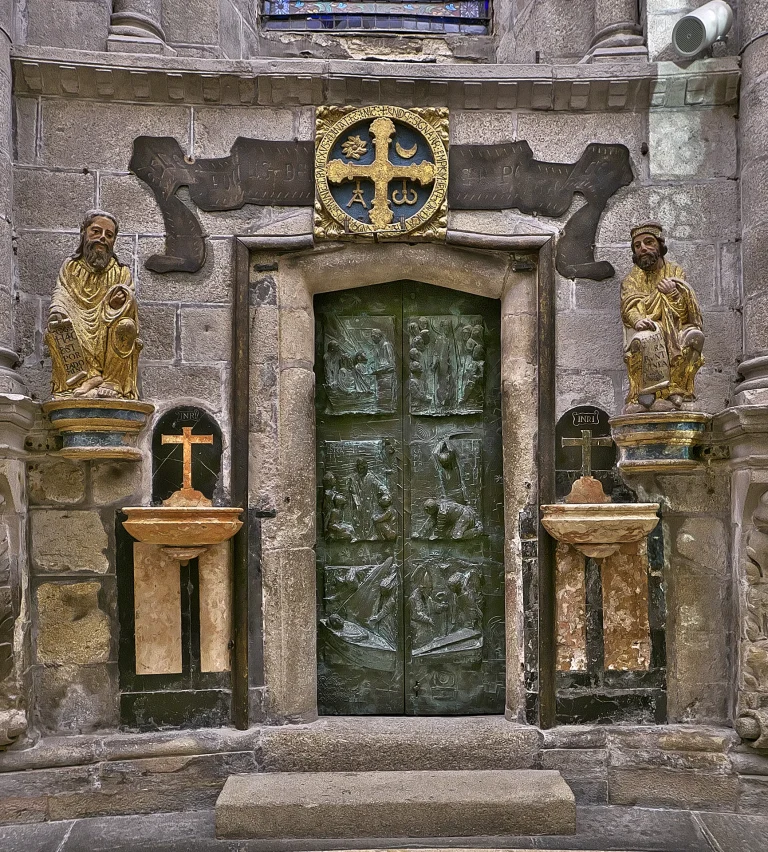
The Holy Door of Santiago Cathedral is located on Praza da Quintana, at the rear of the Cathedral. Once opened, it will remain accessible to pilgrims throughout the Holy Year.

Walking through the Holy Door is one of the most symbolic traditions of the Compostelan Holy Year, but crossing it does not by itself grant the plenary indulgence. Pilgrims who wish to receive the Jubilee indulgence must also meet the religious requirements explained in our section on how to earn the plenary indulgence during the Holy Year.

Holy Door seen from inside the Cathedral of Santiago de Compostela

If you want to attend the opening ceremony in person, bear in mind that Praza da Quintana and the surrounding streets are expected to fill up well in advance, so booking accommodation in Santiago’s historic centre early is highly recommended.

💡 CAMINO INSIGHT: Because the Holy Door is opened only during a Compostelan Holy Year, witnessing this tradition is a once-in-a-lifetime experience for many Camino walkers.

St James’ Day 2027: The Feast of Saint James on 25 July

St James’ Day, 25 July, is the most important date in Santiago de Compostela’s Jacobean calendar. It is also Galicia Day, and in 2027 it falls on a Sunday, which is precisely why that year is celebrated as a Compostelan Holy Year.

One of the main ceremonies is the National Offering to Saint James the Apostle, traditionally made by the King of Spain or a representative on his behalf during the solemn celebrations at Santiago Cathedral.

The Botafumeiro may also be used during certain liturgical celebrations, but it does not operate at every Mass and cannot be guaranteed. Its use depends on the Cathedral’s liturgical programme for the day.

The period from 15 to 25 July is expected to concentrate some of the most important religious celebrations of the Holy Year, as well as the highest demand for accommodation in Santiago. The European Youth Pilgrimage is also expected to bring a significant number of young pilgrims to the city during this period.

If you plan to arrive in Santiago around St James’ Day, booking accommodation and services well in advance is especially important.

Tiraboleiros operating the Botafumeiro in the Cathedral of Santiago de Compostela.

What to expect around St James’ Day 2027:

✔Solemn celebrations at Santiago Cathedral.

✔National Offering to Saint James the Apostle.

✔Botafumeiro, if included in the liturgical schedule.

✔Cultural and religious events throughout Santiago.

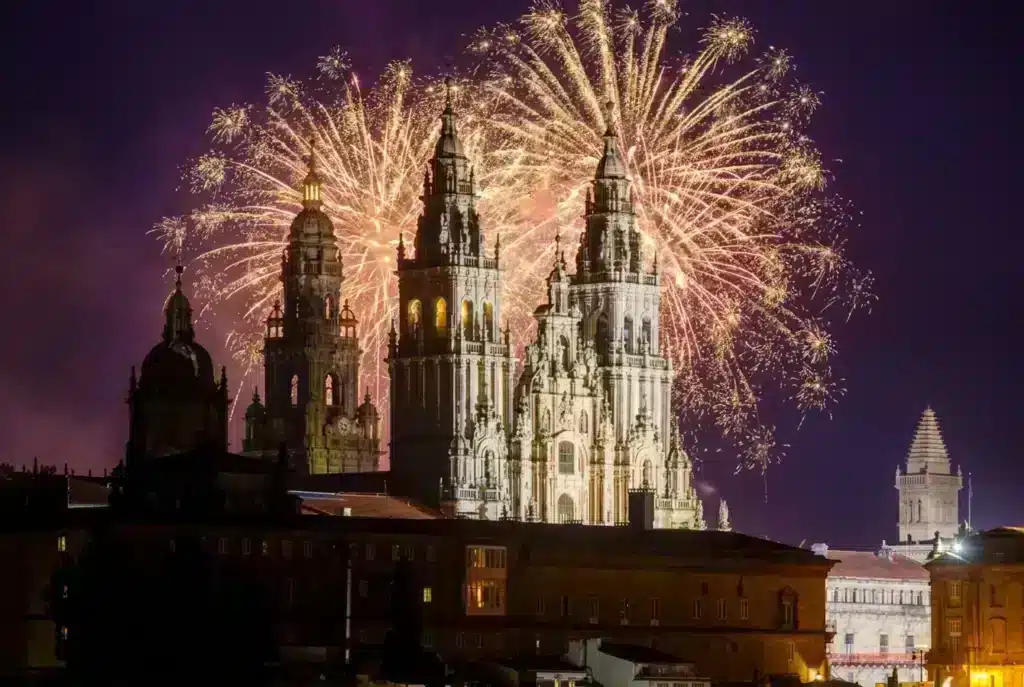
✔ Fireworks display.

✔Increased pilgrim numbers and very high accommodation demand.

A Full Year of Cultural Events

Xacobeo 2027 will extend far beyond the celebrations of 25 July. Throughout the year, the Xacobeo 27 programme organised by the Xunta de Galicia will provide the framework for a wide cultural agenda across Santiago de Compostela and other locations along the Camino.

El Día del Apóstol en Santiago de Compostela

Concerts, exhibitions, heritage activities, festivals and events linked to Galician culture will complement the religious programme of the Holy Year. The official calendar will be published progressively, so travellers should check the latest announcements as their travel dates approach.

For visitors travelling from the United States or planning a longer stay in Galicia, the Holy Year is also an ideal opportunity to experience more than the Camino itself. You can combine your Camino with local experiences in Galicia, including gastronomy, wine, cultural heritage and additional time in Santiago de Compostela.

💡Galiwonders Tip: If your itinerary allows it, book at least one extra night in Santiago after finishing the Camino. This gives you time to enjoy the city without rushing, visit the Cathedral and take advantage of the cultural programme taking place during Xacobeo 2027.

How to Earn the Plenary Indulgence During the Holy Year

For many pilgrims, walking the Camino during a Holy Year is also an opportunity to receive the plenary indulgence, one of the spiritual traditions associated with the pilgrimage to Santiago de Compostela.

In simple terms, a plenary indulgence is a grace granted by the Catholic Church during a Compostelan Holy Year. However, you do not need to have walked the Camino to receive it. The minimum distance requirements apply to the Compostela certificate, not to the indulgence itself.

To receive the plenary indulgence, pilgrims must:

✔ Visit the Tomb of Saint James in Santiago Cathedral.

✔ Pray for the intentions of the Pope.

✔ Receive the Sacrament of Reconciliation (Confession) and Holy Communion within the 15 days before or after the visit. These sacraments may be received in any church, not necessarily at Santiago Cathedral.

✔ Take part in Holy Mass.

The Holy Year is open to everyone, regardless of whether you walk the Camino for religious, cultural, personal or sporting reasons. Those who wish to take part in the Catholic traditions of the Jubilee may do so by fulfilling the requirements above.

💡 CAMINO INSIGHT: The first Holy Year of Compostela was established by Pope Callixtus II in the 12th century, and since then, millions of pilgrims have traveled to Santiago to obtain the Jubilee.

Holy Door, Jubilee and Compostela: What’s the Difference?

The Jubilee refers to the plenary indulgence granted by the Catholic Church during the Compostelan Holy Year.
The Holy Door is the symbolic entrance to Santiago Cathedral that is opened during a Holy Year.
The Compostela is the certificate issued by the Pilgrim’s Office to pilgrims who meet the required distance and credential rules.

In 2027, the Compostela will be exactly the same as in any other year. To qualify, you must complete at least the last 100 km on foot or 200 km by bike, carrying a properly stamped Pilgrim Passport. In the final 100 km, pilgrims should collect at least two stamps per day.

What it is Requirements Who grants it
Jubilee The plenary indulgence, a spiritual grace associated with the Compostelan Holy Year. Visit the Tomb of Saint James, pray for the Pope’s intentions, receive Confession and Holy Communion within 15 days before or after the visit, and take part in Holy Mass. The Catholic Church.
Holy Door The symbolic entrance to Santiago Cathedral during a Holy Year. No mandatory requirement. Crossing it does not replace the requirements for receiving the Jubilee indulgence. It does not grant anything by itself. It is opened by the Archbishop of Santiago at the beginning of the Holy Year.
Compostela The official pilgrim certificate. Complete at least 100 km on foot or horseback, or 200 km by bike, with a properly stamped Pilgrim Passport. At least two stamps per day are required in the final 100 km. The Pilgrim’s Office.

You can read more about how to get your Compostela and how to use the Pilgrim Passport.

The Door of Forgiveness in Villafranca del Bierzo

During a Holy Year, the Church of Santiago in Villafranca del Bierzo, on the French Camino, opens its Door of Forgiveness. Pilgrims who are unable to continue to Santiago because of illness or injury may receive the plenary indulgence there, provided they have already completed at least 100 km of the Camino and meet the corresponding religious requirements.

This tradition makes Villafranca del Bierzo an important spiritual point on the Camino Francés during a Compostelan Holy Year.

Which Camino Route Should You Walk in 2027? A Guide by Crowd Level

There is no single “best” Camino for Xacobeo 2027. The right route depends on how many days you have available, your fitness level and, especially during a Holy Year, how comfortable you are with crowds.

The highest concentration of pilgrims is expected on the final 100 km into Santiago, particularly between Sarria and Santiago on the French Camino and Tui and Santiago on the Portuguese Camino.

If you want to experience one of the classic routes while avoiding some of that pressure, consider starting farther back. For example, beginning the French Camino in O Cebreiro gives you a longer and more complete experience before reaching the busiest final stages.

1. French Camino

The French Camino is the classic choice and offers the most traditional Camino atmosphere, with historic towns, excellent infrastructure and an international mix of pilgrims.

In 2027, however, the section from Sarria to Santiago is expected to be particularly busy. Starting farther back, for example in O Cebreiro, allows you to experience more of the route before joining the highest concentration of pilgrims.

It is an excellent choice for first-time pilgrims who want to experience the social and international side of the Camino, but booking early will be especially important during the Holy Year.

2. Portuguese Camino

The Portuguese Camino combines accessible stages, historic towns and a good range of accommodation. It is a strong choice for first-time pilgrims looking for a balance between tradition and comfort.

The final section from Tui to Santiago is likely to experience high demand during Xacobeo 2027, particularly in spring, summer and around St James’ Day on 25 July.

For travellers who want the Portuguese experience with slightly fewer crowds, the coastal alternative can be a good option.

3. Camino del Norte

The Camino del Norte is a good choice for pilgrims who want a quieter experience, with dramatic coastal scenery, fishing towns and excellent gastronomy along the way.
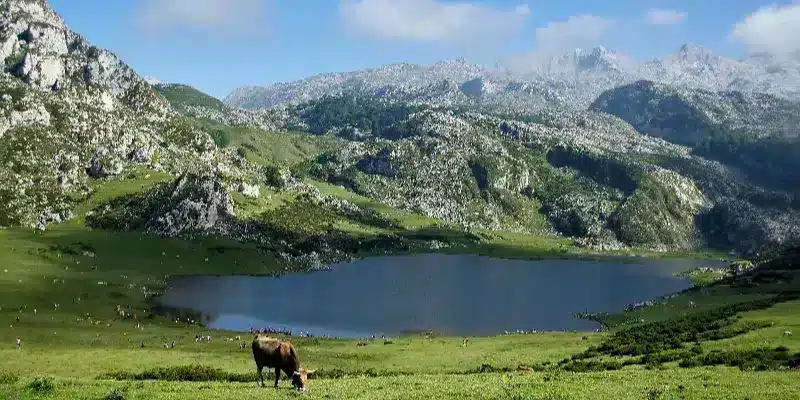
It is generally less crowded than the French Camino, but it also has fewer accommodation options, particularly private rooms in smaller towns. For that reason, in 2027 it is especially important to book with more notice than you might expect from a less popular route.

The Camino del Norte joins the French Camino in Arzúa, so the final two stages into Santiago are likely to be busy during the Holy Year.

4. Camino Primitivo

The Camino Primitivo is one of the best choices for travellers who want to experience the Holy Year without the same level of crowds found on the French or central Portuguese routes.

Known as the Original Way, it is traditionally associated with King Alfonso II, who travelled from Oviedo to Santiago in the 9th century.

There are two main ways to experience it. Starting in Oviedo allows you to walk the full route in around two weeks, while starting in Lugo gives you a shorter option covering the final 100 km in around 4 or 5 stages.

This is a physically demanding route, with mountain stages and significant elevation, particularly in Asturias. It is therefore better suited to experienced walkers or travellers with a good level of fitness.

The key challenge in 2027 will be accommodation. The Primitivo has fewer properties with private rooms than the main Camino routes, so even a moderate increase in pilgrim numbers can have a noticeable impact on availability. This is one of the routes where booking early and working with a local team that knows the accommodation options at each stage can make a significant difference.

The Camino Primitivo joins the French Camino in Melide, meaning that the final stages into Santiago will still be busy during Xacobeo 2027.

5. Portuguese Coastal Way and English Way

The Portuguese Coastal Way is a strong alternative for travellers who want Atlantic scenery and slightly lower crowd levels than on the central Portuguese Camino. It combines coastal landscapes, fishing towns and sections beside the ocean before continuing through Galicia towards Santiago.

The English Way from Ferrol is another good option for pilgrims looking for a shorter Camino with generally less pressure than the French and Portuguese routes. Starting in Ferrol, it offers a compact pilgrimage through northern Galicia before reaching Santiago de Compostela.

6. Finisterre Way

The Finisterre Way is different from the other routes because it begins in Santiago de Compostela and continues towards the Atlantic coast.

Rather than being an alternative route into Santiago, it works particularly well as an extension after completing the Camino. It is a good option for pilgrims who want to continue walking after reaching the Cathedral and enjoy a quieter ending on the Galician coast.

RouteBest forDifficultyTypical durationUsual starting pointExpected crowds in 2027
French CaminoFirst-time pilgrims and classic Camino atmosphereModerate7–8 days for a final sectionSarria / O CebreiroVery high, especially from Sarria
Portuguese CaminoComfortable stages and cultural heritageEasy–Moderate5–7 days for a final sectionTuiHigh, especially from Tui
Camino del NorteCoastal scenery and quieter stagesChallengingDepends on starting pointVariousMedium, increasing after Arzúa
Camino PrimitivoHistory, mountains and fewer crowdsChallengingAround 2 weeks from Oviedo / 4–5 stages from LugoOviedo / LugoMedium–Low, increasing after Melide
Portuguese Coastal WayAtlantic scenery and a quieter Portuguese optionModerateDepends on starting pointVariousMedium
English WayA shorter Camino with fewer days availableModerateAround one week or lessFerrolMedium
Finisterre WayExtending the Camino beyond SantiagoModerateSeveral additional daysSantiago de CompostelaLow–Medium

💡 GALIWONDERS TIP: Choosing a less crowded route does not necessarily mean you can leave planning until the last minute. Routes such as the Camino del Norte and Camino Primitivo have fewer private accommodation options, so even a moderate rise in pilgrim numbers can affect availability quickly during a Holy Year.

Not sure which route best fits your travel dates, fitness level or preferred crowd level? Our local Camino experts can help you compare the options and design an itinerary that works for you.

When to Walk the Camino in Holy Year 2027

Choosing when to walk the Camino in Holy Year 2027 will be almost as important as choosing the route itself. During a Holy Year, crowds, accommodation availability and prices can vary significantly depending on the month.

The busiest periods are expected around Holy Week 2027, from 21 to 28 March, with Easter Sunday on 28 March, as well as throughout May and June, the week of 25 July, August and the beginning of September.

If you prefer a quieter experience, some of the best windows are late April, the second half of June and, especially, late September and October. These periods generally offer a good balance between pleasant walking conditions, lower crowd levels and better accommodation availability, making them particularly attractive for international travellers planning a longer trip to Spain.

During peak season, accommodation prices also tend to rise, especially on the most popular final stages into Santiago. Booking early is the best way to secure both availability and a wider choice of places to stay.

Expected Crowd Levels in 2027

January
Low
Winter weather and fewer services open.
February
Low
Winter weather and fewer services open.
March
Medium
Peak around Holy Week 2027 (21–28 March).
April
Medium
Pleasant walking conditions and fewer crowds than in May.
★ Good window in late April
May
High
Spring peak season.
June
High
Usually more comfortable during the second half of the month.
★ Good window in the second half of June
July
High
Peak demand around the week of 25 July.
August
High
Peak season and higher accommodation occupancy.
September
Medium
Busy in the first half of the month, much quieter later on.
★ Good window in late September
October
Low
Good walking conditions and fewer crowds.
★ One of the best windows of the year
November
Low
Shorter days and a greater chance of rain.
December
Low
Winter weather and fewer services open.
High crowds Medium crowds Low crowds ★ Recommended window

For many travellers, the shoulder season offers the best balance between weather, atmosphere and fewer crowds.

You can also read our guide to the best time to walk the Camino for a broader comparison of seasons and conditions.

Why You Need to Book Your 2027 Camino Early

If you’re planning to walk the Camino during Xacobeo 2027, booking early will give you far more flexibility when choosing your route, dates and accommodation.

As a general guideline, travellers planning to walk during the summer months should consider booking around 12 months in advance, while 6 to 9 months ahead is advisable for spring and autumn. These are not fixed deadlines, but during a Holy Year availability is expected to become limited much earlier than usual, particularly on the most popular final stages into Santiago.

Booking through a local team based in Galicia can make a significant difference in a year when accommodation is under greater pressure. At Galiwonders, we work directly with accommodation providers along the different Camino routes, which helps us organise each stage around real local availability rather than simply relying on remote booking systems.

Our itineraries normally include private rooms with private bathrooms, luggage transfers and English-speaking support throughout the trip. Galiwonders is also a women-led local company with a sustainability certification and 24/7 assistance for travellers while they are on the Camino.

And what happens if you cannot reach the end of a stage? If illness, fatigue or another unexpected problem prevents you from continuing, our team can help coordinate assistance and, when necessary, a transfer so that you can reach your accommodation safely. You can learn more about our 24/7 assistance on the Camino.


What one of our North American travellers says
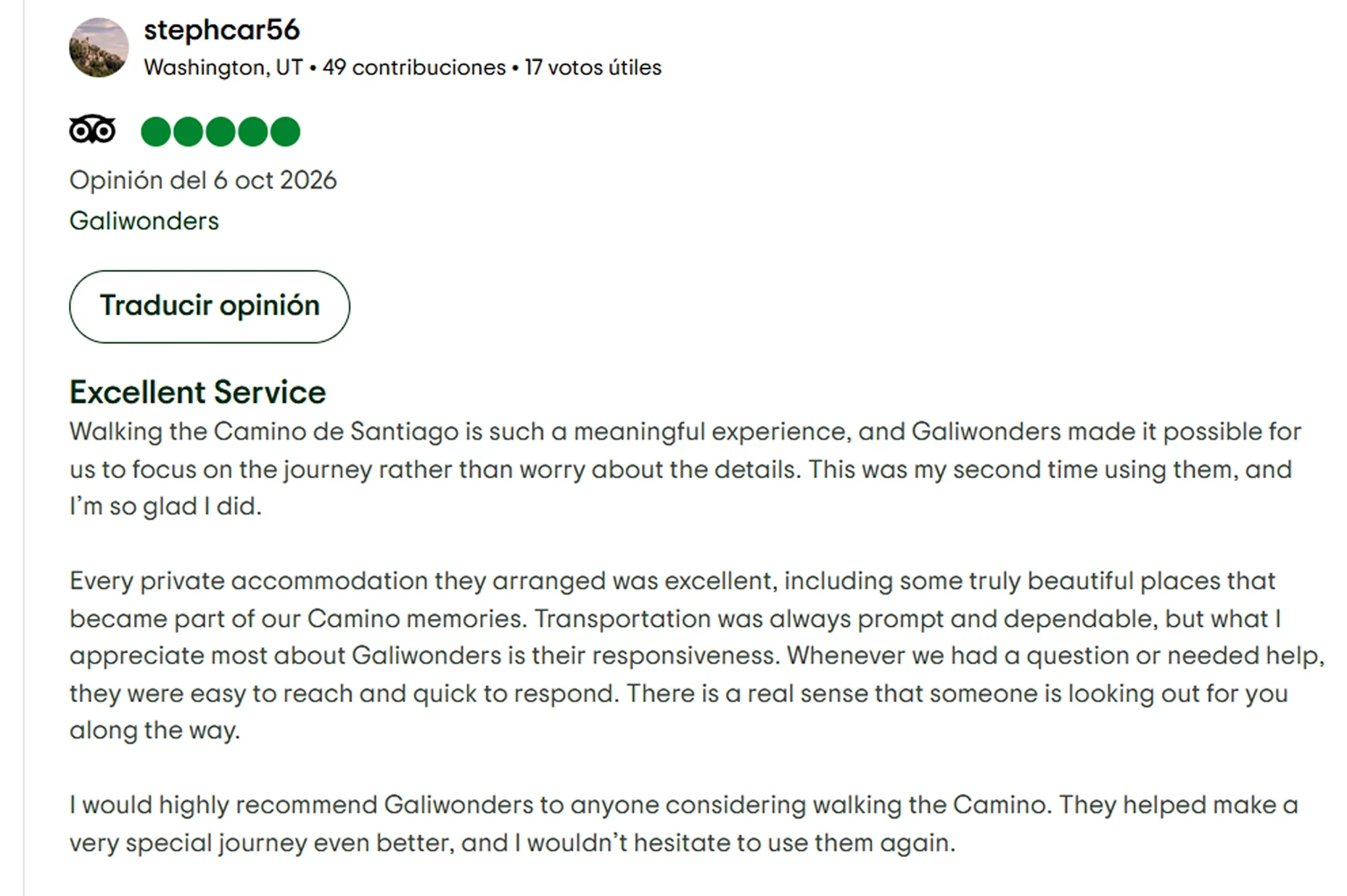
Planning early does not just mean securing a bed. It gives you more choice over your preferred dates, accommodation standard and daily itinerary, while leaving more room to adapt the Camino to your pace.

Ready to start planning your Holy Year Camino? Tell us when you would like to travel and our local team will help design an itinerary around your dates, route and travel style.

Why plan ahead?
Transport is overcrowded
Limited accommodation availability
Seasonal prices
Queues at the Cathedral and museums

What’s Still Not Confirmed for Holy Year 2027

A Holy Year generates a great deal of information well before it begins, and not everything circulating online is officially confirmed. For that reason, it is important to distinguish between what is already known and what is still pending for Xacobeo 2027.

  • ⏳ Papal visit: the Archbishop of Santiago has invited Pope Leo XIV to visit Santiago de Compostela during the Holy Year, but no papal visit has been officially confirmed.

  • ⏳ Liturgical schedule: Mass times and special celebrations for 2027 will be published progressively. Schedules from previous Holy Years should not be used as a definitive reference.

  • ⏳ Botafumeiro: its use cannot be guaranteed. The Botafumeiro does not operate at every Mass and depends on the Cathedral’s liturgical programme.

  • ⏳ Closing ceremony: the Holy Year is expected to end on 31 December 2027, but the exact format and details of the closing ceremony are still pending official confirmation.

  • ⏳ Holy Door opening time: the opening is scheduled for 31 December 2026, but the exact time should only be published once confirmed by the Cathedral or Archdiocese.

We will update this guide as the Cathedral of Santiago, the Archdiocese and the Xunta de Galicia publish official information for Xacobeo 2027.

Frequently Asked Questions About Xacobeo 2027

Lorem ipsum dolor sit amet, consectetur adipiscing elit. Ut elit tellus, luctus nec ullamcorper mattis, pulvinar dapibus leo.

Xacobeo 2027 is the next Holy Year of Santiago de Compostela. It takes place whenever 25 July, the feast day of Saint James, falls on a Sunday, allowing pilgrims to experience traditions and celebrations that are only held during a Holy Year.

31 December 2026. Xacobeo 2027 officially begins with the opening of the Holy Door at Santiago Cathedral. The exact time of the ceremony should be confirmed against the final Cathedral or Archdiocese schedule. The Holy Year is expected to close on 31 December 2027, although details of the closing ceremony are still pending official confirmation.

2032. After Xacobeo 2027, the next Compostelan Holy Years will be 2032, 2038 and 2049.

Yes. Holy Years attract more pilgrims than ordinary years, especially on the most popular final sections into Santiago. The French Camino from Sarria and the Portuguese Camino from Tui are expected to experience particularly high demand in 2027.

Around 12 months ahead for summer and 6 to 9 months ahead for spring and autumn is a useful guideline. Booking early is especially important if you want private accommodation or plan to travel during Holy Week, July, August or early September.


Yes. The Camino and the Holy Year are open to everyone, regardless of religion or personal motivation. Many pilgrims walk for cultural, sporting, personal or spiritual reasons without taking part in the Catholic traditions of the Jubilee.


Because St James’ Day, 25 July 2027, falls on a Sunday. A Compostelan Holy Year is celebrated whenever the feast day of Saint James coincides with a Sunday.

Yes. 2027 is a Jubilee Year in Santiago de Compostela, also known as a Compostelan or Jacobean Holy Year. It is separate from the universal Jubilee celebrated in Rome.

25 July will be the main celebration of the Holy Year. It is both St James’ Day and Galicia Day, with solemn religious ceremonies at Santiago Cathedral, including the traditional National Offering to Saint James. Cultural events are also expected throughout the city.

No. Walking the Camino is not a requirement for receiving the plenary indulgence. The indulgence has its own religious conditions, while the minimum walking or cycling distance applies to the Compostela certificate.

No. The Compostela issued in 2027 is the same certificate available in any other year. Pilgrims must complete at least the last 100 km on foot or 200 km by bike and meet the Pilgrim Passport requirements.

The Camino Primitivo is likely to be one of the quieter major routes. The Camino del Norte, Portuguese Coastal Way and English Way may also offer lower crowd levels than the French Camino or central Portuguese Camino, although accommodation availability can be more limited.

They may be, especially during peak periods. Higher demand around Holy Week, summer, St James’ Day and the busiest final stages can put pressure on accommodation availability and prices.

Possibly, but it cannot be guaranteed. The Botafumeiro does not operate at every Mass and its use depends on the Cathedral’s liturgical programme.

No visit has been officially confirmed. The Archbishop of Santiago has invited Pope Leo XIV, but any papal visit should be considered unconfirmed until announced by the Holy See or the relevant Church authorities.

Ready to start planning?

At Galiwonders, we create tailor-made Camino holidays, taking care of accommodation, luggage transfers and every detail along the way. Tell us when you’d like to travel and our local experts will design an itinerary that fits your schedule and travel style.

👉 Request your personalised quote today!


Picture of Sonia Núñez

Sonia Núñez

Especialista en el Camino de Santiago | Peregrina

Enjoyed this content?

Share it with your friends

WhatsApp
Email

Leave a Reply

Your email address will not be published. Required fields are marked *

Featured articles

We organize your customized Camino de Santiago
Receive your quote in less than 24 hours.

Discover the favorite trips of our pilgrims

241 km
12 nights

from

1187 €
106 km
10 nights

from

986 €
Panoramic View Tui Portuguese Way
128 km
6 nights

from

636 €
740 km
34 nights

from

3176 €
Request your itinerary
Fill up the form and get your itinerary in your email address in 24-48h.
We help you plan your Camino
Solicite seu itinerário
Preencha o formulário e você receberá o orçamento em seu e-mail em 24-48h.
Fordern Sie Ihre persönliche Reiseroute an
BLACK FRIDAY PROMO

GET 10% OFF

Confirm your reservation between 23/11 and 30/11.

Demandez votre itinéraire
Remplissez le formulaire et vous recevrez votre itinéraire sur mesure par e-mail dans les 24h.
Richiedi il tuo itinerario
Compilate il modulo e riceverete il preventivo nella vostra e-mail entro 24-48 ore.
Solicita tu itinerario
Rellena el formulario y recibirás el presupuesto en tu email en 24-48h.