


What Is the Botafumeiro?
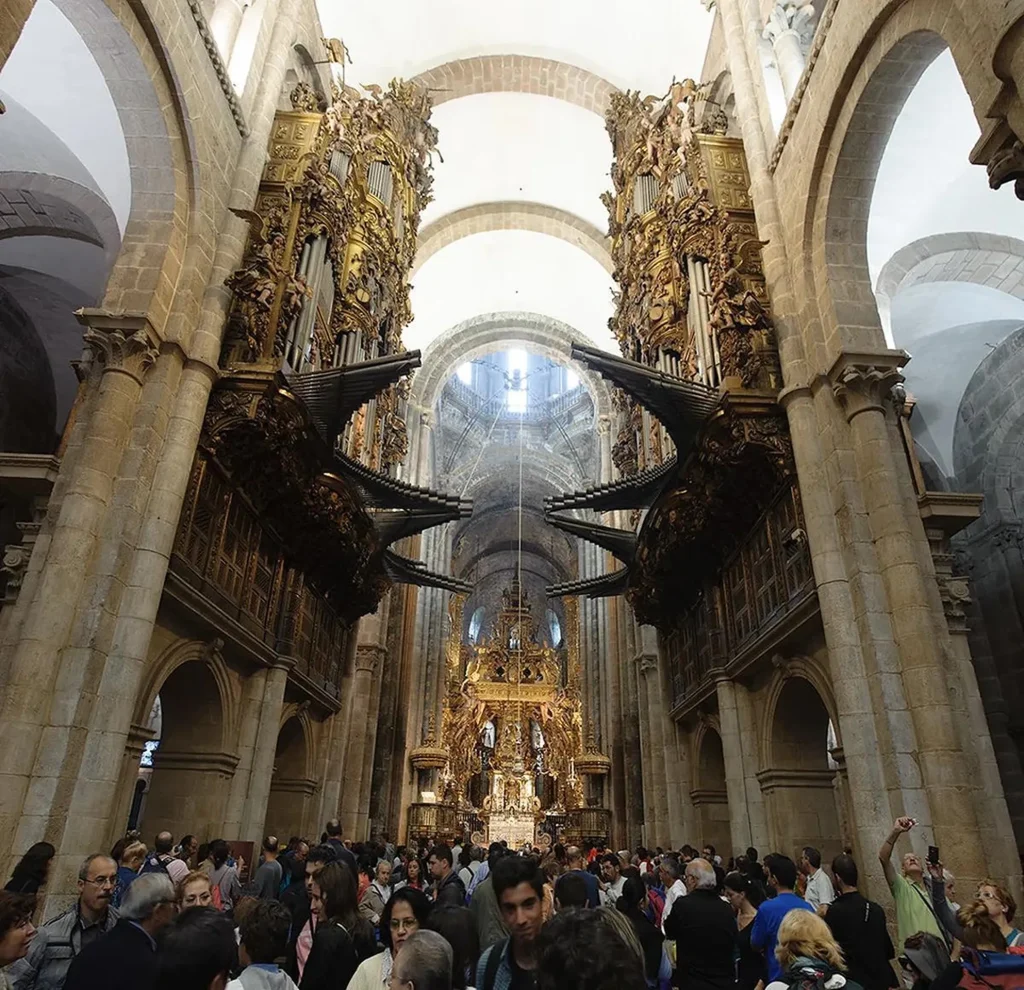
The Botafumeiro is a large ceremonial incense burner, or thurible, housed in the Cathedral of Santiago de Compostela. It is considered one of the largest and most famous incense burners in the world.
Its name comes from the Galician expression botar fume, meaning “to give off smoke.”
The current Botafumeiro measures approximately 1.5 metres (4.9 feet) in height and weighs around 53 kilograms (117 pounds). During the ceremony, it is filled with incense and charcoal and suspended from a system of ropes and pulleys.

Operated by a team of specialists known as tiraboleiros, it can reach speeds approaching 70 km/h (43 mph) as it swings across the cathedral’s transept, releasing clouds of fragrant incense.
Historically, the use of large incense burners has been associated with perfuming the air inside churches that welcomed large numbers of medieval pilgrims.
Today, the Botafumeiro retains its religious and spiritual significance while remaining one of the most recognisable traditions in Galicia.
For travellers planning their Camino de Santiago, seeing the Botafumeiro in action can be a particularly memorable part of arriving in Santiago.

When Can You See the Botafumeiro in 2027?
The Holy Year 2027, also known as Xacobeo 2027, will be particularly significant for Santiago de Compostela because July 25, the Feast of Saint James, falls on a Sunday.
Some of the major religious celebrations in 2027 include:
March 28: Easter Sunday.
May 6: Ascension of the Lord, according to the traditional calendar. Its liturgical observance may be transferred in some dioceses.
May 16: Pentecost Sunday.
July 25: Feast of Saint James the Apostle.
November 21: Solemnity of Christ the King.
These dates can help you plan your visit, but they do not guarantee a Botafumeiro ceremony.
For the latest information, consult the official website of Santiago de Compostela Cathedral.
Can You See the Botafumeiro During the Pilgrim’s Mass?
Yes, the Botafumeiro may be used during the Pilgrim’s Mass, but it is not part of every service.
The Pilgrim’s Mass is normally celebrated daily and is one of the most meaningful religious experiences for those arriving in Santiago after completing the Camino.
However, attending the Pilgrim’s Mass does not automatically mean you will see the Botafumeiro in motion.
If witnessing the ceremony is a priority, we recommend checking the cathedral’s official liturgical schedule in advance.
⚠️ Attention!: Many pilgrims hope to see it swing during the 2027 Holy Year, but it isn’t used at every Mass, so check the Cathedral’s schedule before you travel.
Can You Request a Botafumeiro Ceremony?
In certain circumstances, the cathedral may authorise the use of the Botafumeiro following a request from a group or organisation.
These requests are subject to availability, specific conditions and approval from the cathedral authorities.
As fees and arrangements may change, it is best to contact the cathedral directly rather than rely on an unofficial fixed price.
What Does the Botafumeiro Symbolise?
Beyond its impressive size and movement, the Botafumeiro has a profound religious and spiritual meaning.
In Christian tradition, incense symbolises prayers rising towards heaven.
Its use during religious celebrations expresses reverence, prayer and solemnity.
For many pilgrims, watching the Botafumeiro after completing the Camino de Santiago is an emotional moment.
It marks the end of a journey that may have involved days or weeks of walking, personal challenges and reflection.
Even for visitors without religious motivations, witnessing this tradition offers a unique opportunity to connect with the history and cultural identity of Santiago de Compostela.
Tips for Seeing the Botafumeiro in Santiago Cathedral
If you would like to experience the Botafumeiro during your visit to Santiago de Compostela, keep these practical tips in mind:
Check the official schedule. Confirm whether a Botafumeiro ceremony is planned for the date of your visit.
Arrive early. The cathedral can be particularly busy during major religious celebrations and peak pilgrimage periods.
Respect the religious service. The Botafumeiro is part of a liturgical ceremony, so visitors should remain respectful and follow the instructions of cathedral staff.
Plan your arrival in Santiago. If you are walking the Camino, consider the dates of important religious celebrations when organising your final stages.
Have a backup plan. Even if the Botafumeiro is not operating, Santiago Cathedral has an extraordinary history, architecture and artistic heritage worth exploring.
Experience the Camino de Santiago and Discover the Botafumeiro
Arriving in Santiago de Compostela is one of the most anticipated moments for anyone walking the Camino de Santiago.

Visiting the cathedral, meeting fellow pilgrims and potentially witnessing the Botafumeiro ceremony are all part of an experience that combines history, culture and spirituality.
If you are considering walking the Camino during Xacobeo 2027, we recommend planning your trip well in advance, especially if you would like to arrive in Santiago around the main religious celebrations.
At Galiwonders, we are a local travel agency specialising in tailor-made Camino de Santiago trips, including accommodation, luggage transfers and assistance throughout your journey.
Explore our Camino de Santiago routes and start planning your next adventure in Galicia.





4 Responses
Will the Botafumeiro Swing any day in January beside the 6th.
Hi Linda! 😊The Botafumeiro usually swings only on specific dates, and in January it’s typically just on the 6th (Epiphany). However, sometimes it can also be requested by groups or pilgrim organizations for special occasions. Please note that these additional swing dates are often confirmed only a few days in advance, once the Cathedral receives those private requests. We recommend checking directly with the Cathedral shortly before your visit!
How can I get a ticket to see the Botafumeiro swing in May 2026?
Hi Claire!
To see the Botafumeiro swing in Santiago de Compostela, you generally have two options:
Attend one of the special liturgical masses where it is scheduled to operate (main feast days like Easter, 25 July, Christmas, etc.). No ticket is needed in that case, just arrive early.
If your dates do not match those celebrations, it can sometimes be requested privately by groups or individuals, but this requires contacting the Cathedral in advance and usually involves a donation (availability is not guaranteed).
There is no regular “ticket office” for it — access is always linked to the Cathedral’s schedule or special requests.
For your specific dates (May 2026), the best option is to check the official Cathedral channels closer to your travel dates or attend if it coincides with a scheduled mass 🙂