All you need to know to plan your visit to Santiago Cathedral.
The Cathedral of Santiago de Compostela is one of Spain’s most iconic spots and a must-visit landmark for pilgrims and travelers alike. Alongside Santiago, Spain boasts other impressive cathedrals that are worth exploring, such as Catedral de la Almudena in Madrid, La Sagrada Familia in Barcelona, and the Catedral de Sevilla.
This historic monument, the final stop of the famous Camino de Santiago, combines Romanesque, Gothic, and Baroque architecture and houses artistic and religious treasures that attract thousands of visitors every year (learn more about the Cathedral here).
Below you will find the updated visiting times, Mass schedule, and access details for the Cathedral’s most important areas, so you won’t miss anything during your visit.
Opening hours of Santiago Cathedral for tourist visits
The Cathedral is open to the public during extended hours with free admission to the nave and chapels:
- Monday to Sunday: 7:00 a.m. to 8:30 p.m. (last admission)
⚠️Heads up!: From 31 December 2026, pilgrims will also be able to enter through the Holy Door for Xacobeo 2027.
Mass and religious service schedules
The Pilgrim’s Mass at Santiago de Compostela Cathedral is celebrated every day of the year at four different times: 7:30 a.m., 9:30 a.m., 12:00 p.m., and 7:30 p.m.
The 12:00 mass is the most traditional and popular, especially among pilgrims who have completed their journey, as it is when the Botafumeiro incense burner is swung.
During Holy Years in Compostela, the number of masses may increase due to the greater influx of pilgrims. However, in non-Holy Years, the times remain constant throughout the year.
PILGRIM MASS SCHEDULE
7:30 a.m. High Altar.
9:30 a.m. High Altar.
12:00 p.m. High Altar.
7:30 p.m. High Altar.

Other masses
Mass in the Chapel of Corticela: an independent parish located within the Cathedral of Santiago, renowned for its historical and artistic value.
Daily Mass schedule: celebrated every day at 11:00 a.m. in the Chapel of Corticela. For updated details, visit lacorticela.es.
Special schedules on holidays and celebrations
It is important to note that, on some occasions, Mass may be moved to nearby churches such as San Francisco or San Fiz de Solovio due to renovations or special events in the Cathedral of Santiago.
During special dates such as Christmas, Easter, or the Holy Year of St. James (Año Santo Jacobeo), the Cathedral of Santiago opening hours and Mass schedule may change. Always check the official liturgical calendar and updated timetables before your visit to avoid any inconvenience.
Opening hours for the different areas inside the Cathedral of Santiago
Tomb of St. James the Apostle
Visiting hours: every day from 7:00 a.m. to 9:00 p.m.
Note: on Saturdays during summer, closing time is at 8:30 p.m. due to the Pilgrims’ Vigil.
Chapel of Corticela
Opening hours: 7:45–8:30 a.m., 10:15 a.m.–1:30 p.m., and 3:30–8:30 p.m.
Note: this is an independent parish within the Cathedral, known for its historical and artistic value.
Botafumeiro
Swing times: during the Pilgrim’s Mass at 12:00 p.m. and 7:30 p.m. at the High Altar.
Note: this huge medieval censer offers a unique spectacle admired by visitors from all over the world. If you wish it to be used outside the scheduled times, a voluntary contribution or special fee is required.
Portico of Glory
Free visits: Monday to Sunday from 4:00 to 5:30 p.m. (tickets available Tuesday to Saturday, 10:00 a.m.–2:00 p.m.)
Guided tours: paid visits, Monday to Sunday at 12:15 p.m. and 5:30 p.m. Advance reservation required on the official website.
Cathedral Museum
Visiting hours: Monday to Sunday from 10:00 a.m. to 8:30 p.m.
Note: general access is free; some exhibitions require a ticket.
Roofs and Torre de la Carraca
Visiting hours: Monday to Sunday from 10:00 a.m. to 8:30 p.m.
Note: paid access, advance reservation and guided tour required.
The Cathedral of Santiago de Compostela is a true treasure where every corner tells a story. You can find more details at catedraldesantiago.es.
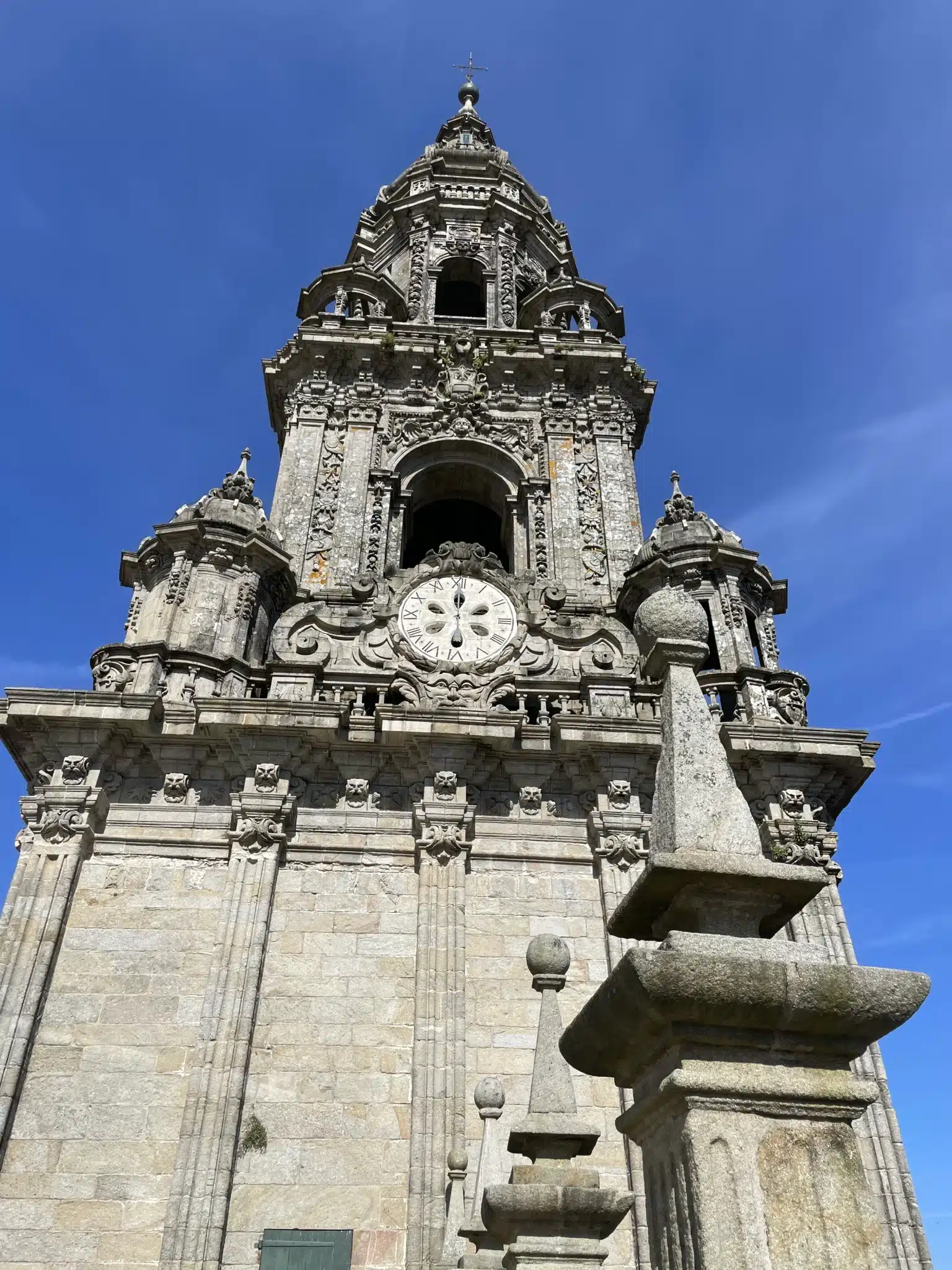
How to plan your visit to Santiago Cathedral
Best time of day to visit
The early morning hours (7:00–10:00) are ideal to enjoy the Cathedral of Santiago with fewer tourists, explore the Nave and Chapels in peace, and take photos without crowds.
Subscribe to our newsletter and receive our FREE Practical Guide to the Camino de Santiago. In this guide you will find all the information you need to start planning your Camino.

Recommended duration of the visit
It is recommended to allow 1 to 2 hours for a complete visit, including the Nave, Chapels, Museums, and the Pilgrims’ Route.
Tips to avoid unexpected issues:
- Arrive early in the morning to avoid crowds.
- Avoid weekends or special celebration days if you are looking for a quieter visit.
- Book guided tours during off-peak hours to enjoy a more relaxed experience.
Lockers and baggage storage:
Only small backpacks are allowed inside the Cathedral (subject to security control at the entrance). For larger luggage, such as pilgrims’ backpacks, using a baggage storage service allows you to explore the Cathedral freely and enjoy all its spaces without inconvenience.
You can use storage services near the historic center or at the Pilgrim’s Office, where you can leave your belongings for a few hours or the entire day.
For more details, visit the Pilgrim’s Office website or Santiago Turismo.
How to get there and nearby transportation
The Cathedral is accessible on foot from the train station and the historic city center. It can also be reached by local bus. Check here for more details.
Safety and etiquette recommendations
- Keep silent inside the Cathedral.
- Follow instructions during ceremonies.
- Avoid using flash when taking photographs.
- Do not enter with large backpacks.
- Pets at the Cathedral: Only guide dogs are allowed inside the Cathedral. Other pets cannot enter, so make sure to plan accordingly if you are travelling with animals.
FAQs about Santiago Cathedral
If you are planning a visit to Santiago or walking the Camino de Santiago, these are the most frequently asked questions our visitors usually have when they arrive at the cathedral:
Monday to Sunday, generally from 7:00 a.m. to 8:30 p.m. Always check the official website.
During peak season, it is held at 7:30 a.m., 9:30 a.m., 12:00 p.m., and 7:30 p.m. On holidays, the schedule may change.
No, admission is free to the main nave and chapels, as well as to embrace the Apostle and visit the tomb (although you will have to queue), but you must book in advance for guided tours or access to the tower.
Admission to the nave and chapels is free. Tickets are required to climb the tower and visit the museums.
Yes, in several languages including Spanish, English, French, and Portuguese.
Yes. The Chapter of the Cathedral of Santiago de Compostela makes it possible to offer a Mass in the Basilica of St. James the Apostle. To do so, you must send an email to [email protected] indicating the intention of the Mass and make a donation of €10 (or the customary alms in each country).
Yes, the Cathedral offers several audio guide options. You can use the free official app on your mobile phone, which includes maps, audio, and videos in several languages. Physical audio guides are also available at the Pilgrim’s Office, covering the Portico of Glory and the Master Mateo Space. In addition, Santiago Tourism offers online resources and interactive video guides to explore the Cathedral at your own pace.
The Pilgrim Mass usually lasts between 45 and 60 minutes, depending on the day and the celebration. It is advisable to arrive early to find a seat, as it is usually very crowded.
The Botafumeiro is not used in every mass. It is used on special feast days, during Holy Year celebrations, and also when a group or visitor requests the ritual as a special treat in exchange for a donation. For specific dates, it is best to consult the Cathedral’s official calendar.
The Pilgrim’s Route that every pilgrim arriving in Santiago must follow is as follows:
- Portico of Glory
- Main Chapel and Embrace of the Apostle
- Tomb of the Apostle
- Botafumeiro
- Corticella Chapel